
Bachelor of Science Programme in Life Science 180 credits

About the programme
As a chemist and molecular biologist, you can, for example, develop medicines and vaccines, create new forensic techniques, or improve crops. The programme covers a broad range of topics within chemistry and molecular biology and provides you with the tools to understand how life functions at the molecular level.
Laboratory work with state-of-the-art equipment
International study environment
Specialize in chemistry or molecular biology
Programme overview
-
Chemistry
30%
-
Molecular Biology
30%
-
Elective courses
32%
-
Thesis project
8%
While studying
Life Science is about the building blocks of life
Life Science is the study of living organisms and the processes that make life possible. The field spans health, disease and medicines, as well as plants, animals and interactions in nature. Chemistry and biology form the foundation, and together they help us understand and address important challenges for both people and the environment.
Nobel Prize in 2020 for CRISPR-Cas9
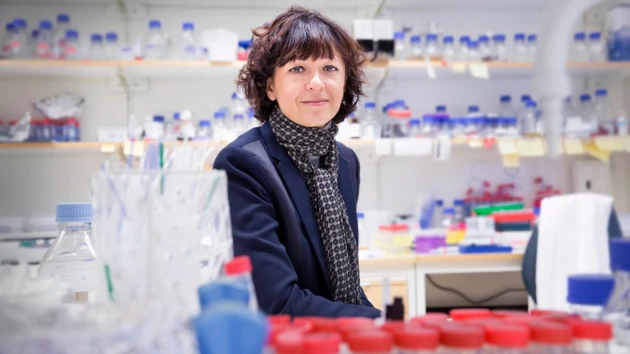
As a strong testament of this, the Nobel Prize in Chemistry in 2020 was awarded to Emmanuelle Charpentier who was active at Umeå University when the CRISPR-Cas9 method was developed.
Develop your skills in the lab
Teaching consists of a varied mix of lectures, classes, group work, seminars and practical laboratory work, with a strong focus on problem-solving. In laboratory sessions, you will apply modern techniques to investigate chemical and molecular biological processes. You do not need to feel at home in the laboratory from the outset, as you will gradually develop your skills throughout the programme. There is plenty of opportunity to discover what interests you most, from practical experiments to analysis, problem-solving and scientific communication.
All teaching in English
All course literature and teaching are in English. This gives you the opportunity to practise reading, discussing and presenting science in the language used throughout much of the research community and the life science sector. It prepares you for further studies and work in international environments, both in Sweden and abroad.
Year 1
Biological chemistry
Fundamentals of chemistry
Biochemistry
Organic chemistry
Year 2
Microbiology and basic molecular biology
Basic and molecular genetics
Cell biology
Animal and plant physiology
Year 3
Breadth and depth through optional courses
Degree thesis in Chemistry or Molecular Biology
Earn a double bachelor's degree
After completing the Life Science Programme, you can call yourself a chemist, a molecular biologist, or both. You have the opportunity to finish your studies with a double bachelor’s degree in both subject areas. A double bachelor’s degree requires only half a semester of additional study.
During the first and second years of the programme, you will gain fundamental knowledge in chemistry and molecular biology. You will study courses such as organic chemistry, biochemistry, cell biology and molecular genetics. In your first year, you will also take a course in data processing, where you will learn how to process, interpret and present scientific data.
Specialise through advanced courses
In your third year, you can choose to specialise in the area you find most interesting through more advanced courses, or broaden your knowledge by studying other subjects. The programme concludes with a degree project, where you will have the opportunity to apply your knowledge in a laboratory setting.
We also have an active industry council to connect companies and the labour market in Life Science to the programme through guest lectures, information sessions, online events and career fairs.
Meet one of your teachers: Teresa Frisan
Read more about studying abroad: interview with Ida Bengtsson
Choose programme specialisation
Future and career opportunities
The programme provides a broad foundation of theoretical and practical skills for your future career. As a chemist or molecular biologist, you may, for example, work in pharmaceutical or biotechnology companies, often within research, development and communication. Your scientific expertise is also valuable beyond the laboratory, in roles where you analyse, explain and put knowledge into practice.
You may also work as an environmental adviser, business leader, sales representative, investigator or science journalist. The programme provides an excellent foundation for continuing your studies through, for example, a master’s programme at Umeå University or elsewhere in Sweden or around the world. With further studies, you can also progress to doctoral education and a career in research.
Common jobs
The Life Science programme provides a broad foundation with excellent opportunities to get jobs e.g:
• In the development of new drugs and vaccines at pharmaceutical companies
• In medical technology
• At diagnostics companies, be able to make diagnostics
• Linked to criminology
• Production and development of e.g. food and makeup
• In project management and as a consultant in the entire life science sector
• In addition to this opportunity to continue in research!
A stated goal of being leading life-science nation
Sweden has a national strategy for life science with a stated goal of being a leading life-science nation. In Sweden alone there are thousands of companies and the sector is growing rapidly both internationally, in Sweden, and in Umeå.
Read more about life science companies in the Umeå region
Further studies?
The Bachelor of Science Programme in Life Science qualifies for further studies on advanced level. A Master's degree provides a good basis for doctoral studies, but also increases your overall competitiveness on the labour market.
Masterprogram
Programme directors


Apply
-
Autumn 2027
-
Bachelor of Science Programme in Life Science
International admissions round
HT27 / Umeå / English / On campus
Show more Show less
StartAutumn term 2027
Number of credits180 credits
Type of studiesOn campus
Study pace100%
Length3 years
Study locationUmeå
LanguageEnglish
Application codeUMU-G1506
EligibilityGeneral entry requirements and Biology 2/level 2, Chemistry 2/level 2, Mathematics 3c or Mathematics Further level 1c or Mathematics DSelectionGrade point average (66%) - Swedish Scholastic Aptitude Test (34%)
DegreeAfter completing the programme, a student who has applied for a degree can obtain a Degree of Bachelor of Science (180 credits) in accordance with the local qualification descriptor established by the Vice-Chancellor (see Umeå University's website).
In Swedish, Degree of Bachelor of Science (180 credits) is called Naturvetenskaplig kandidatexamen. The degree is awarded in one of the main fields of study, Chemistry or Molecular biology.ApplicationOnline applications are now open. Application deadline is 15 January 2027.
Application and tuition feesAs a citizen of a country outside the European Union (EU), the European Economic Area (EEA) or Switzerland, you are required to pay application and tuition fees for studies at Umeå University.
Application fee: SEK 900
Tuition fee, first instalment: SEK 76,150
Total fee: SEK 456,900
-
Bachelor of Science Programme in Life Science
Second admissions round for EU/EEA citizens
HT27 / Umeå / English / On campus
Application opens 15 March 2027Show more Show less
StartAutumn term 2027
Number of credits180 credits
Type of studiesOn campus
Study pace100%
Length3 years
Study locationUmeå
LanguageEnglish
Application codeUMU-P1506
EligibilityGeneral entry requirements and Biology 2/level 2, Chemistry 2/level 2, Mathematics 3c or Mathematics Further level 1c or Mathematics DSelectionGrade point average (66%) - Swedish Scholastic Aptitude Test (34%)
DegreeAfter completing the programme, a student who has applied for a degree can obtain a Degree of Bachelor of Science (180 credits) in accordance with the local qualification descriptor established by the Vice-Chancellor (see Umeå University's website).
In Swedish, Degree of Bachelor of Science (180 credits) is called Naturvetenskaplig kandidatexamen. The degree is awarded in one of the main fields of study, Chemistry or Molecular biology.ApplicationThe online application opens 15 March 2027 at 13:00 CET. Application deadline is 15 April 2027. Please note: This second application round is intended only for EU/EEA/Swiss citizens.
Application and tuition feesAs a citizen of a country outside the European Union (EU), the European Economic Area (EEA) or Switzerland, you are required to pay application and tuition fees for studies at Umeå University.
Application fee: SEK 900
Tuition fee, first instalment: SEK 76,150
Total fee: SEK 456,900
-
How to apply
Apply online via universityadmissions.se
You apply to our programmes and courses via universityadmissions.se – the official website for higher education applications in Sweden. There, you can track your application, check that your documents have been registered, and log in to find our your admission results.
Late applications
Admissions to most programmes and courses typically close after the final application deadline. However, some programmes and courses may still accept late applications if seats are available. These are marked “Open for late application” on universityadmissions.se. Please note that late applications are not guaranteed to be reviewed.
More about application and admission
Film about the programme
Why study Life Science and what is it like? Our students Paul, Fotios and Fatim tell you all about it.

Voices about the programme
-
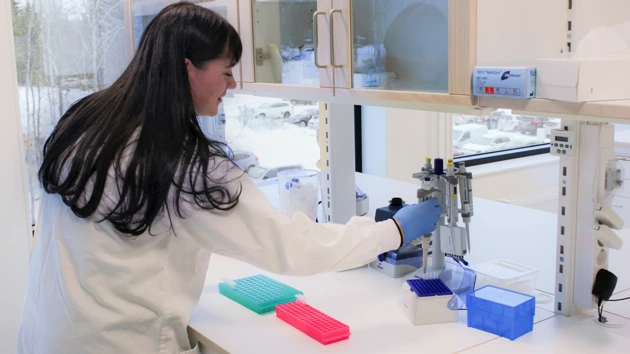
Eleonora works on the production of antibodies
Alumni
The possibility to study in English attracted Eleonora Hedin to the Bachelor's programme in Life Science. Following her degree she works at Nordic Biomarker producing antibodies for healthcare purposes.
-
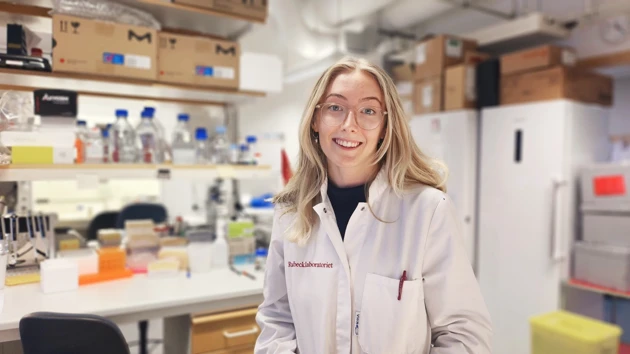
The Bachelor's degree was only the beginning - now Elin is a doctoral student
Alumni
"I really like it up north and Umeå University has such a good reputation" says Elin Vikström. "It was really both the city and the programme that attracted me." She studied the Life Science programme and then went on to master's and doctoral studies.
-

High ambitions attracted Michael to Umeå
Alumni
Michael Baumgärtner from Germany knew he wanted to study abroad. Finding a university in Europe with a good education system was a priority. He chose between Finland and Sweden, and at Umeå University he found the right programme for him, the Bachelor's programme in Life Science.
-
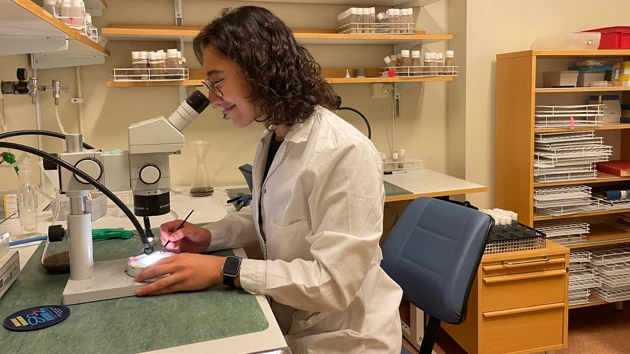
Inés researches about mechanisms in chromosomes
Alumni
"I felt like I had a lot to learn about the available disciplines within biology before I could choose one" says Inés Hernandez Crego. She felt the Bachelor's programme in Life Science offered a broad base.


Frequently asked questions
What is Life Science?
The Bachelor's Programme in Life Science provides students with a broad competence in chemistry and molecular biology. Career paths include pursuing a Master’s degree and having an academic career, or working in biotech industries with research and development, and communication.
What is required for a Bachelor’s degree in chemistry and/or molecular biology?
180 credits in total, 90 credits need to be within chemistry or molecular biology, 15 credits need to be at bachelor’s level and 15 credits need to be a thesis at bachelors level.
Read more about degree requirements
What courses are at the bachelor’s level/G2F?
It is courses that have prerequisites of at least 60 credits within the field or at least 120 credits in total.
How do I find a research group/supervisor for my bachelor’s thesis?
As a student you are responsible for contacting a supervisor/research group with the help of the teacher responsible for the course.
Read more about research groups:
https://www.umu.se/en/faculty-of-science-and-technology/research/research-groups/
https://www.umu.se/en/faculty-of-medicine/research/research-groups/
https://www.umu.se/en/department-of-medical-and-translational-biology/research/research-groups/
https://www.umu.se/en/ucmr/ucmr-organisation/
Is it possible to write your thesis at another university in Sweden/abroad?
Yes, but we require that you have a co-supervisor from Umeå University.
Is the programme conducted in English or Swedish?
The education is conducted in English.
Is it possible to take a degree in both chemistry and molecular biology?
Yes, it is possible to do so if you fulfil the requirements for the degree. You need 180 credits in total, of which 90 credits need to be within the field of chemistry or molecular biology, 15 credits need to be the thesis and at least 15 credits need to at a G2F level. For more information please contact study guidance.
Where can I find contact information for the programme?
For more information about the programme, please email lifescience.chemistry@umu.se.
Explore your future at Umeå University
Join a vibrant academic community where high-quality education meets groundbreaking research in science, technology, humanities, and the arts. At Umeå University, you will learn from passionate, expert teachers and benefit from a close connection between research, education, collaboration, and innovation.
-

World's most satisfied international students
#1 globally in the main categories of Living, Support, and Overall Satisfaction.
-

A university with health at its core
Umeå University is certified as a Healthy Campus, with many initiatives that promote health and well-being.


Contact us
Your message goes to Infocenter, and they’ll make sure it gets to the right person – so you get the best and most relevant reply.
Programme is given by
Faculty of Science and TechnologyGood to know

How to apply
A step-by-step guide to apply for studies at Umeå University.

Ways to meet Umeå University
Join us at webinars and student fairs – ask questions and explore your future!

Experience Umeå
Northern Sweden’s largest city – diverse, dynamic, and student-friendly.