Merve Yesilbas

Merve Yesilbas is responsible for the course Biophysical-chemical Concepts. She is an assistant professor at the Department of Chemistry. In her research she investigates how minerals, water, and planetary environments interact to shape the bio(geo)chemical conditions required for life. The research focuses on the catalytic roles of minerals and rocks in initiating, stabilizing, and preserving life sustaining chemical reactions, with a central goal of addressing a fundamental astrobiological question: Is there, or has there ever been, life on Mars?
Read more about Merve Yesilbas Lab
Read an article about her research
Knut Irgum
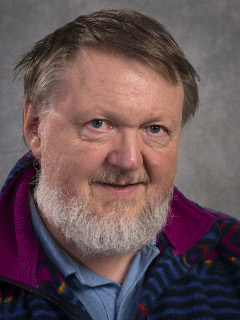
Knut Irgum is the course coordinator for Advanced Experimental Chemical Tools. He is professor of Analytical Chemistry. In his research, he combines materials science with analytical chemistry to develop separation materials for analytical and preparative chromatography. One of the most successful companies he has founded or been involved in is SeQuant AB, which is a world leader in its field.
Read more about Knut Irgum Lab
Johan Trygg

Johan Trygg is responsible for the course Chemometrics. He is professor of Chemometrics, Director of the Computational Analytics Support Platform, and a member of the Royal Swedish Academy of Engineering Sciences (IVA). His research focuses on how statistical and mathematical methods can be used to understand, prevent and treat diseases, thereby improving global health. He has several industrial engagements, including with the life science company Sartorius, where he serves as Head of Advanced Data Analytics.
Read more about Johan Trygg Chemometrics Lab
Michael Holmboe

Michael Holmboe is an associate professor and responsible for the course Computational Chemistry. His research is conducted within the field of nano‑geochemistry and is particularly focused on the chemistry that takes place at the interface between water and mineral surfaces.
Read more about Michael Holmboe Lab
Peter Haglund

Peter Haglund is responsible for the course Advanced Environmental Chemistry. He is a professor of Environmental Chemistry and conducts research on, among other things, organic environmental contaminants in marine ecosystems. He is part of the strategic research area Ecochange, whose research focuses on the environment and climate in the Baltic Sea.
Christian Hedberg

Christian Hedberg is responsible for the course Advanced Organic Chemistry. He is a professor of Organic Chemistry, and his research focuses on developing chemical tools to investigate infection mechanisms at the molecular level. He also conducts research on Cryptosporidium, a parasite that is one of the most common causes of waterborne diseases affecting both livestock and humans.
Read more about Christian Hedberg Lab
Christiane Funk

Christiane Funk is responsible for the course Protein Separation and Analytical Techniques. She is a professor, and her research focuses on plant proteases as well as on techniques for using Nordic microalgae for wastewater recycling and biomass production.
Read more about Christiane Funk Lab
Read a feature article about her research
Andre Mateus

Andre Mateus is responsible for the course Biochemistry – Protein Structure and Function. He is an assistant professor and in his research studies the interplay between diseases, drugs and bacteria in the human gut microbiota. The aim is to identify ways to influence the composition of the gut microbiome in order to achieve better health.
Read more about Andre Mateus Lab
Read a feature article about Andre Mateus’ research