

MIMS Investigators
They are a small number of junior PIs of similar calibre and career stage as MIMS Group Leaders whose research complements the MIMS/EMBL community particularly well.
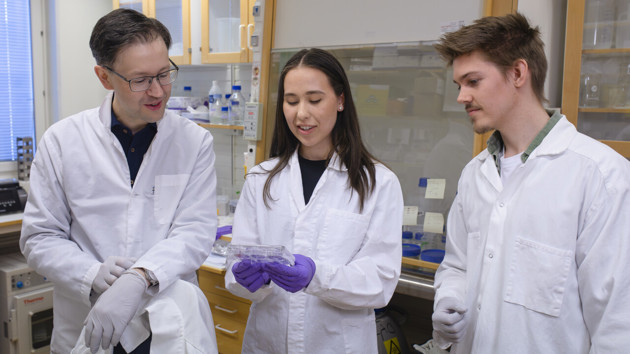
From left to right: Lars-Anders Carlson, MIMS Investigator, and summer students Louise Nenzén and Oskar Skoglund.
MIMS Investigators
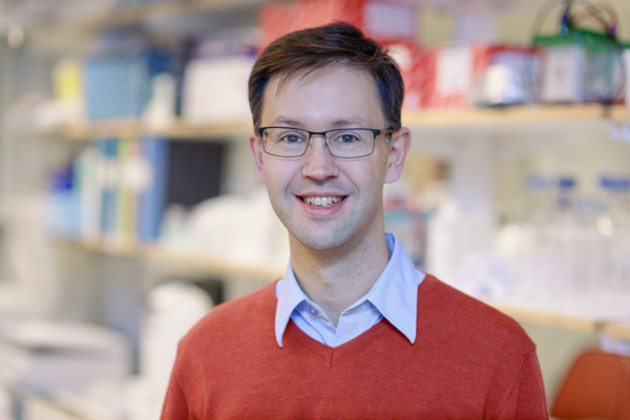
Lars-Anders Carlson
MIMS Investigator since 2020 and Wallenberg Molecular Medicine Fellow since 2016
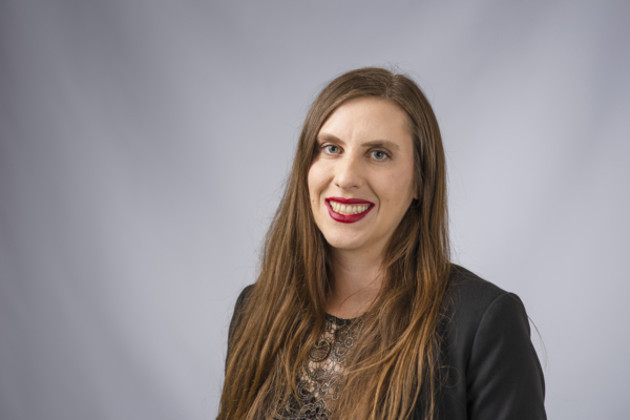
Laura Carroll
MIMS Investigator since 2022, SciLifeLab and Data-Driven Life Science Fellow since 2022

Andreas Luttens
MIMS Investigator since 2025, SciLifeLab and Data-Driven Life Science Fellow since 2025
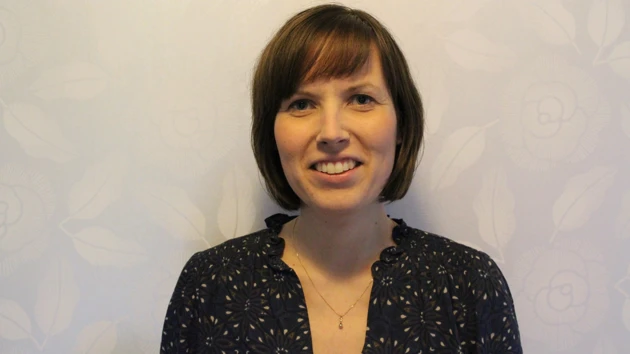
Annasara Lenman
MIMS Investigator since 2025

Kristoffer Sahlin
MIMS Investigator since 2025 and SciLifeLab Fellow since 2020

Max Renner
MIMS Investigator since 2025 and Wallenberg Academy Fellow since 2025
Research description
Lars-Anders Carlson
I am fascinated by how viruses rearrange the interior of the cells they infect. A positive-strand RNA virus will often have a genome with one single gene and around ten thousand bases, and yet it can completely remodel the cytoplasm within hours of infection. To understand how this happens, we are combining methods such as biochemical reconstitution and in situ structural biology (cryo-electron tomography).
Laura Carroll
(Meta)genomic sequencing is playing an increasingly pivotal role in clinical and public health microbiology. As such, the amount of publicly available (meta)genomic data derived from microbes, including pathogens, is growing rapidly. As a computational microbiologist, I develop and utilize bioinformatic approaches, which can query these massive data sets to improve pathogen surveillance, source tracking, outbreak detection, and risk evaluation efforts.
Andreas Luttens
We are developing RAPID (Robust Accelerated Protease Inhibitor Discovery), a drug discovery platform, which will enable Sweden to respond rapidly to emerging pathogens, substantially reducing the time between outbreak detection and therapeutic intervention. By integrating high-throughput experimentation with deep learning, the platform is designed to deliver potent antiviral candidates within unprecedented timelines. Beyond pandemic preparedness, its modular architecture enables efficient adaptation to a broad range of disease areas.
Annasara Lenman
Hantaviruses are zoonotic pathogens that enter the human body via inhalation yet primarily replicate in endothelial cells. This raises a fundamental question: how do they traverse the respiratory tract to reach their target sites? We hypothesise that HFRS-causing hantaviruses establish infection in the respiratory epithelium as a critical first step in their life cycle and that hantaviruses with varying virulence levels exploit distinct molecular pathways to cross the epithelial barrier and infect endothelial cells. Using an advanced primary 3D-lung model, co-culture systems, and integrated transcriptomic, proteomic, and single-cell RNA sequencing approaches, we aim to identify host factors and molecular networks that regulate early infection events and influence disease severity. Building on these datasets, we will also explore how hantavirus infection engages the dark proteome.
Kristoffer Sahlin
Advancements in DNA sequencing technologies have rapidly increased the number of genomes available in public databases. Most sequencing data analysis requires mapping of the sequences to databases. However, read mapping has become impossible in several applications with rapidly growing sequencing databases. Although numerous clever read mapping algorithms have been developed, the main limitation with state-of-the-art methods is that they are incompatible with efficient external memory algorithms due to their algorithm designs. My research aims to overcome mapping limitation by developing a novel scalable external memory algorithm for read mapping to enable unattainable genome analyses of massive sequence databases.
Max Renner
Our team studies how viruses organize and replicate, with a particular emphasis on human respiratory pathogens. We primarily use biochemistry, structural biology and molecular virology approaches to better understand the architecture of virus particles and the replication factories they form within infected cells. Ultimately, our research aims to provide mechanistic insights into virus-host interactions and to identify vulnerabilities in pathogen lifecycles.
Latest update: 2026-05-05 Page editor: Nora Lehotai
Nordic EMBL Partnership for Molecular Medicine




Supporting organisations


