

NEWS On 22 October 2026, Várdduo held a seminar as part of Kin Museum’s seminar series. Nearly 500 people participated to listen to three lectures on land, territory, and borders in the North, presented by three of Várdduo’s researchers.

In collaboration with Kin Museum of Contemporary Art in Kiruna, Várdduo – Centre for Sami Research at Umeå University organized a seminar as part of the museum’s seminar series “Sápmi and Its Cultural History,” a seven-part series where Várdduo’s seminar was the second event in the programme. The seminar focused on land, territories, and borders in the North, and their meanings and transformations throughout history.
The seminar was held in a hybrid format, with participants attending both in person and online via Zoom and YouTube Live. In total, around 500 people joined to listen to the three lectures.
“It is very gratifying to see that so many people were interested in our seminar. Five hundred participants is a very large audience for us,” says Christina Storm Mienna, Director of Várdduo.
Várdduo’s seminar, entitled “Bound to the Ground,” explored connections to land and the loss of those connections in Sámi communities. Following an introduction by Várdduo’s Director Christina Storm Mienna and Kin Museum Director Maria Lind, Várdduo researchers Gudrun Norstedt, Åsa Össbo, and Kristina Sehlin MacNeil each delivered a lecture on the topic.
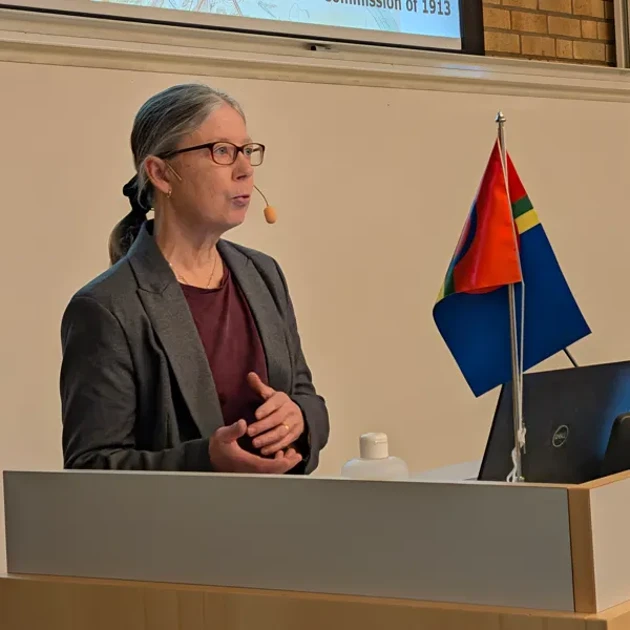
Gudrun Norstedt talks about national borders in Fennoscandia.
Gudrun Norstedt opened the seminar by taking the audience on a journey through northern Fennoscandia and its border-making processes, from the 1600s to the 1970s. She demonstrated how the border between Sweden and Norway has often conflicted with the migratory patterns of Sámi reindeer herders. Over time, the two countries introduced various agreements that, to varying degrees, allowed Sámi people to use land across the border while preventing land ownership in the neighbouring country. As a result, reindeer-herding Sámi gradually lost the right to use land on the other side of the border.
Åsa Össbo then presented a lecture on the Cultivation Border (odlingsgränsen), which was originally established to protect Sámi reindeer grazing lands. She showed how the process reflected both cooperation and conflicts among different groups within local communities, both before and after this lengthy undertaking. Another aim was to prevent sparsely productive areas from becoming overpopulated through agricultural settlement. Looking back, however, it is clear that the boundary did not safeguard these lands from settlement or industrial development such as mining, railways, and hydropower projects.
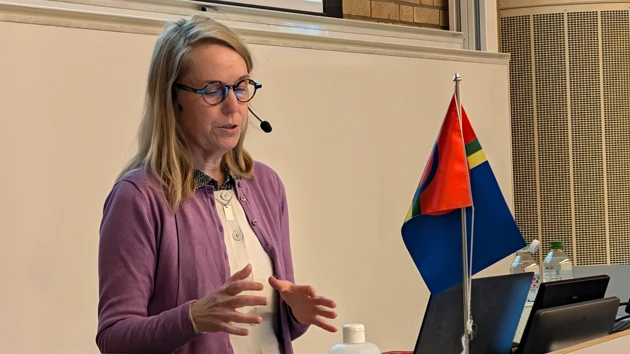
Åsa Össbo talks about the Cultivation Border.
Kristina Sehlin MacNeil delivered the third and final lecture, addressing the relationship between Sámi people and other Indigenous peoples and their lands in a rapidly changing geopolitical era. She demonstrated how Indigenous peoples around the world have emphasized the importance of land for livelihoods, identity, and culture, and how industries and Indigenous communities often have fundamentally different understandings of what is meant by “land.” She also highlighted the impact of colonialism on Indigenous peoples’ relationships with their territories, as well as how contemporary geopolitical shifts connected to the green transition may generate new conflicts over ownership and land-use rights.
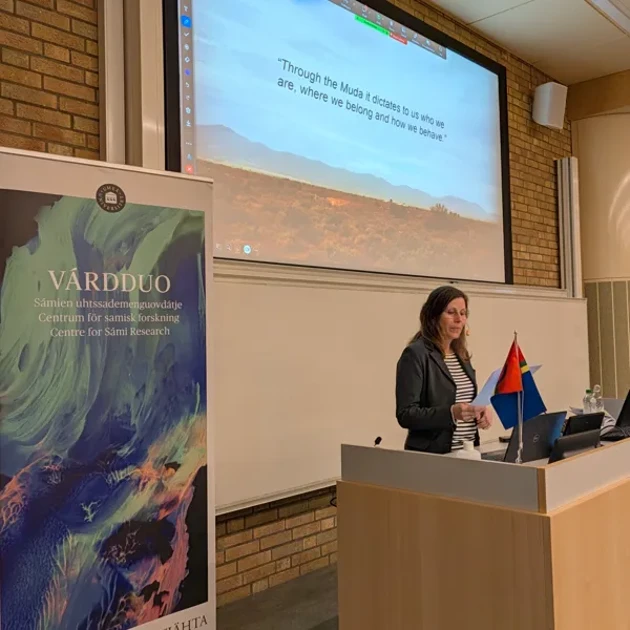
Kristina Sehlin MacNeil talks about the meaning of land for Indigenous peoples.
The seminar provided valuable insights into how historical processes continue to shape contemporary understandings of land, identity, culture, and rights, and underscored the importance of history for informing present-day perspectives and future work.
The seminar was recorded on Youtube Live.
Watch the seminar here