

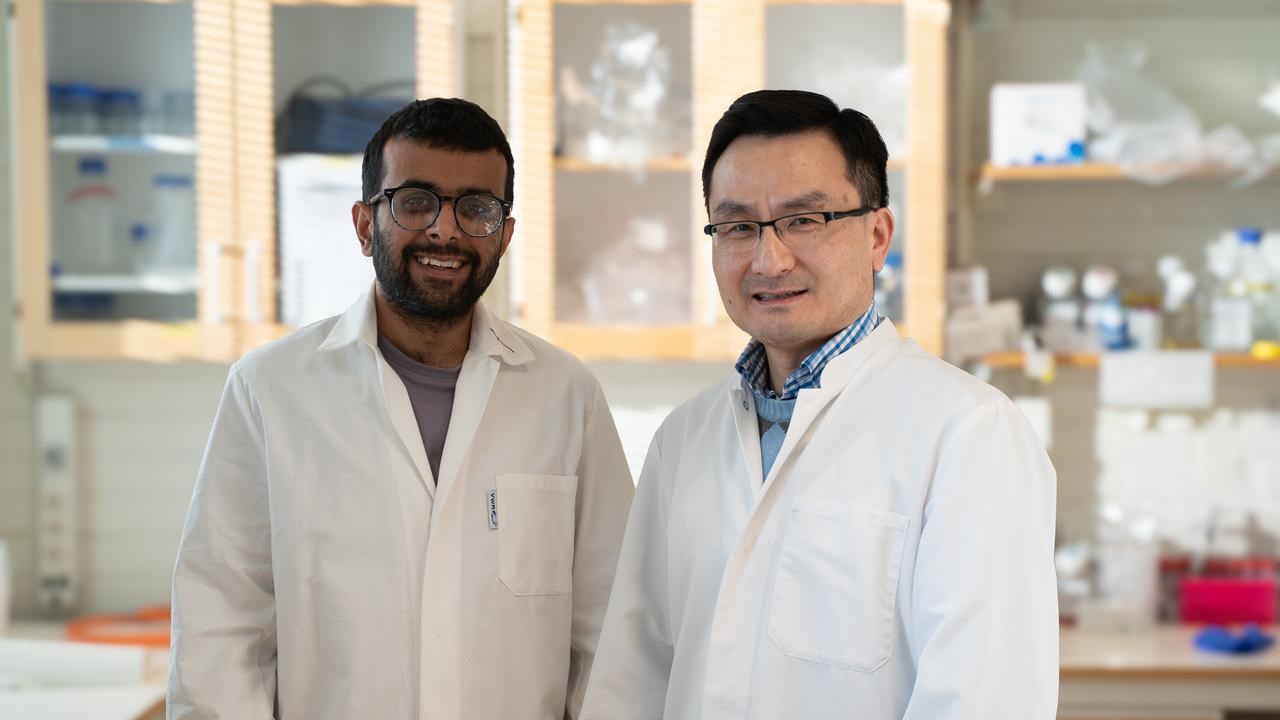
NEWS Harshit Malhotra has been awarded the prestigious Marie Skłodowska Curie Actions (MSCA) Postdoctoral Fellowship for his project CHIME-Z, which integrates chemo optogenetics with metabolic engineering to enable precise, light controlled production of value added biochemicals such as next generation biofuels. The fellowship will support Harshit’s research under the supervision of Professor Yaowen Wu, in close collaboration with Professor Anita Sellstedt at the Umeå Plant Science Centre.

Harshit Malhotra, Postdoc at the Department of Chemistry
Image Mattias PetterssonWhen we talk about the future of sustainable biotechnology, few ideas are as transformative as the ability to reprogram living cells with precision. This is the core ambition driving Harshit Malhotra’s MSCA‑funded project, CHIME‑Z, which explores how bacteria can be rewired to produce valuable compounds, such as next‑generation biofuels, using cutting‑edge chemo‑optogenetic tools.
Metabolic engineering has already reshaped our understanding of what microbes can do. Yet, controlling microbial systems with the spatiotemporal precision needed for efficient, industrial‑scale bioproduction remains one of the field’s holy grails. By merging advanced chemical biology with optogenetics, Harshit aims to create programmable bacterial platforms capable of generating value‑added products (VAPs) with high efficiency. Such innovation is not only technologically exciting, it arrives at a moment when global sustainability, rising energy demands, and decarbonization strategies are more urgent than ever.
With CHIME‑Z, our goal is to bring unprecedented precision to microbial metabolic engineering, using light and chemistry to switch pathways on and off when and where we need them. This opens the door to cleaner biofuels and smarter bioproduction, and it’s a powerful step toward sustainable synthetic biology.
CHIME‑Z is the outcome of a convergence of expertise, experience, and long‑standing scientific curiosity. The foundation was laid at Umeå University, where Professor Yaowen Wu’s research group has been pioneering chemo‑optogenetic tools for precise control of cellular processes in living systems. Harshit saw an opportunity:
to merge these sophisticated tools with his own background in metabolic engineering.
Before arriving in Sweden, Harshit completed his PhD under Professor Prashant Phale at IIT‑Bombay, where he engineered Pseudomonas bharatica CSV86T to degrade the toxic pesticide Carbaryl, a project that gave him experience in reprogramming bacterial metabolism. The conceptual leap was natural: if microbes can be redesigned to degrade pollutants, why not also re‑engineer them to produce sustainable fuels?
CHIME‑Z was born at this intersection:
Wu’s precision‑control technologies × Harshit’s metabolic‑engineering expertise.
Harshit envisions CHIME‑Z as both a scientific and societal catalyst. In the near term, the project aims to demonstrate how chemo‑optogenetic systems can be integrated into microbial factories to precisely control metabolic pathways. In the long term, the same technology could shape the future of:
MSCA fellowships are rooted in mobility and researcher development, and Harshit says Umeå University was an ideal destination for both. The university offers a highly supportive environment, state‑of‑the‑art scientific facilities, and a culture that encourages interdisciplinary collaboration. Working closely with Professor Yaowen Wu has been central to his project’s conceptual evolution, but the institutional ecosystem as a whole —research infrastructure, collaborative atmosphere, and access to advanced technologies —will shape every step of his growth as a scientist.
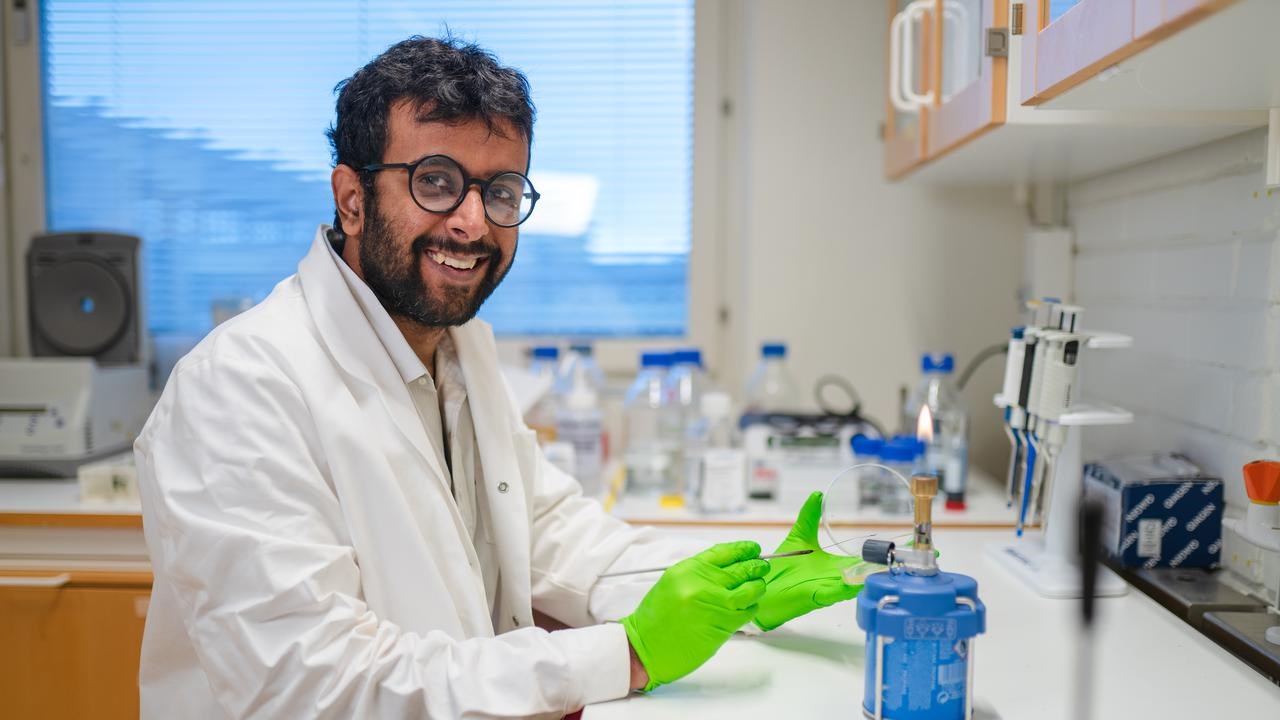
One of the most exciting aspects of CHIME‑Z for Harshit is its collaborative nature. These collaborations will not only broaden his scientific expertise but also equip him with specialized skills essential for his long‑term career in synthetic biology and metabolic engineering. For Harshit, CHIME‑Z is more than a project, it’s a platform for becoming a more versatile, collaborative, and innovative researcher.

