

"False"
Skip to content
printicon
Main menu hidden.
Published: 2025-12-09

New book on Dark Romanticism

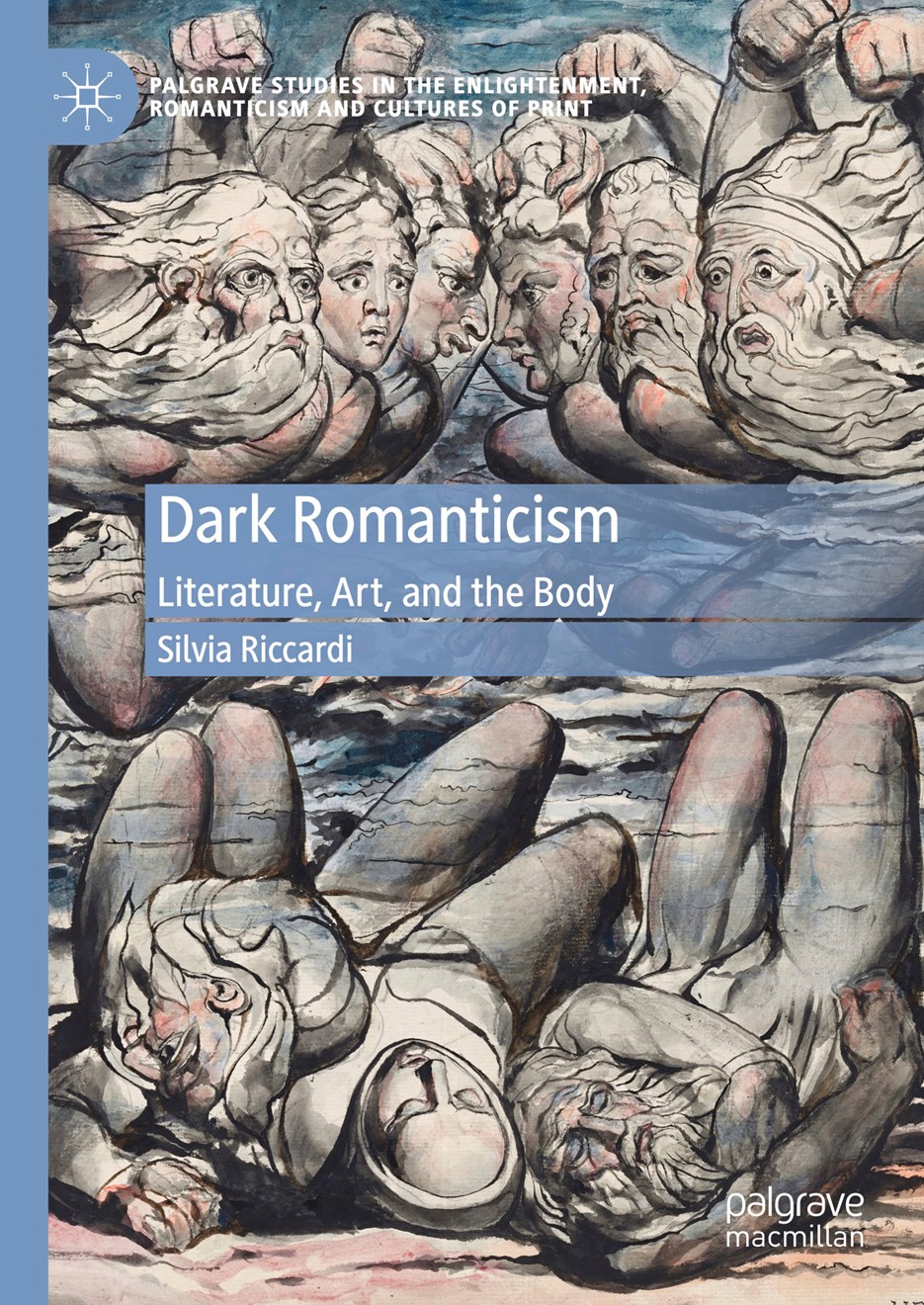
NEWS “Dark Romanticism: Literature, Art, and the Body”, is a new book by Silvia Riccardi at Umeå University. The book explores the dark regions of Romantic imagination in late eighteenth- and early nineteenth-century literature and art.

Text: Linnéa Tjernström & Per Melander

Silvia Riccardi begins by telling how her background is rooted in literary studies, with a strong emphasis on visual culture and a comparative approach across text and image.

– The archival study undertaken in Switzerland, Germany, and the UK introduced an art-historical dimension to my work that continues to shape how I approach research. It also kindled my interest in how the material presence of books and artworks is being redefined within digital environments.
 
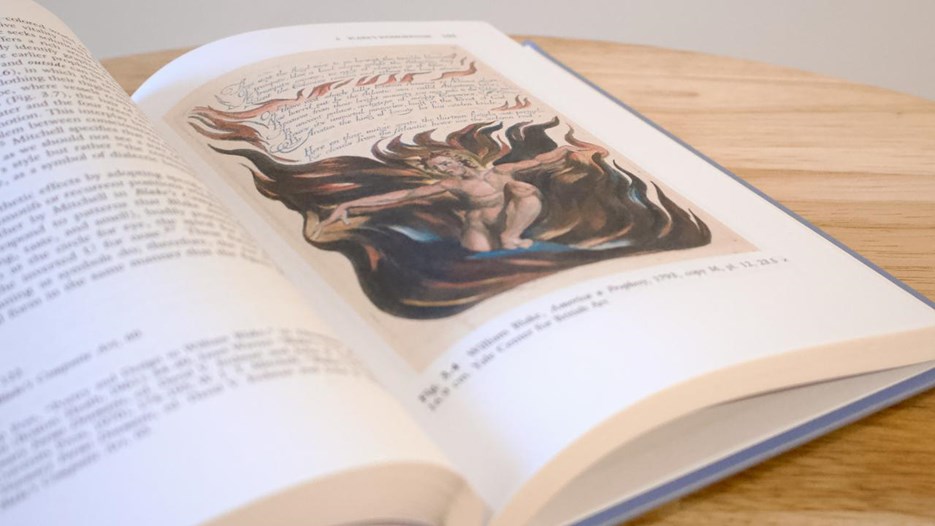
On the question what inspired her to write the book, she says that the initial spark came from William Blake.

– How could it be that I saw darkness in his most radiant visions but light in the imagery grappling with death? That contrast was there, persistent and unresolved. I wanted to understand how he held those opposites together, and that question became the starting point for the book. Can darkness be visible?

Working with three different figures

When it comes to the book series: Palgrave Studies in the Enlightenment, Romanticism and Cultures of Print, Silvia Riccardi says that the series foregrounds the material and cultural dimensions of print in the eighteenth and nineteenth centuries, where literature and other disciplines, including art, medicine, and science intersect.
 
– My book contributes to this conversation by examining how methods of production shape the forms and meanings of literature and art, closely looking at the vibrant intellectual discourse surrounding anatomy and aesthetics at the turn of the century.
 
She continues to say that one of the main challenges was working with three different figures: Henry Fuseli, a painter, Mary Shelley, a novelist, and William Blake, an engraver, poet, and painter.
 
– Blake is particularly hard to place alongside the others, and for a while I even considered writing a book on Blake alone. Bringing him into conversation with Fuseli and Shelley made sense conceptually, but shaping those connections was not easy.
 
– In retrospect, this approach reveals a dark sensibility that emerges across these distinct authors and artists, and the process taught me a great deal about allowing connections to unfold gradually, while also remaining open to unexpected insights and to revisiting some chapters along the way.

Move beyond disciplinary boundaries

Silvia Riccardi notes that the book is aimed at scholars and students of eighteenth- and nineteenth-century literature and visual culture, as well as researchers interested in book history, media theory, and Romantic-period art.
 
– It also speaks to readers working on Henry Fuseli, William Blake, and Mary Shelley. Rather than presenting a genre, the book offers a framework for understanding Dark Romanticism as an aesthetic mode that exceeds categories such as the Gothic or fantasy.
 
– More broadly, the book invites readers to move beyond disciplinary boundaries and to consider how a distinctly dark sensibility operates across media at a time when aesthetics and empirical knowledge were both sites of fierce intellectual debate, ideological contention, and revolutionary rethinking.

About the book

The book Dark Romanticism: Literature, Art, and the Body explores the dark regions of Romantic imagination in late eighteenth- and early nineteenth-century literature and art. It uncovers the palpable and pleasing anxiety about the human body in the works of Henry Fuseli, William Blake, and Mary Shelley, focusing on the negotiations of pleasure and pain, life and death, beauty and monstrosity.
 
Each of the works examined revolves in some manner around the breakdown of an idealized body to illuminate the transition from organic to fragmented form. This approach involves reorienting conventional accounts of Romanticism around the emergence of a visual paradigm.
 
Engaging with cultures of print, aesthetic discourse, anatomical art, as well as natural historical knowledge circulating in England at the turn of the century, Dark Romanticism cultivates visual literacy and argues that literary and pictorial elements are inseparable when imagination is at work.

Read more