

NEWS Umeå University and the energy company Umeå Energi are now developing a new AI‑based decision support system at the Dåva combined heat and power plant in Umeå. “AI is about increasing efficiency, profitability, and operational reliability. Here, we place a strong emphasis on complying with the EU’s AI Regulation for high‑risk AI in energy supply. It demands transparency and risk minimisation to safeguard people’s safety and rights,” says Juan Carlos Nieves Sanchez, AI expert at Umeå University.
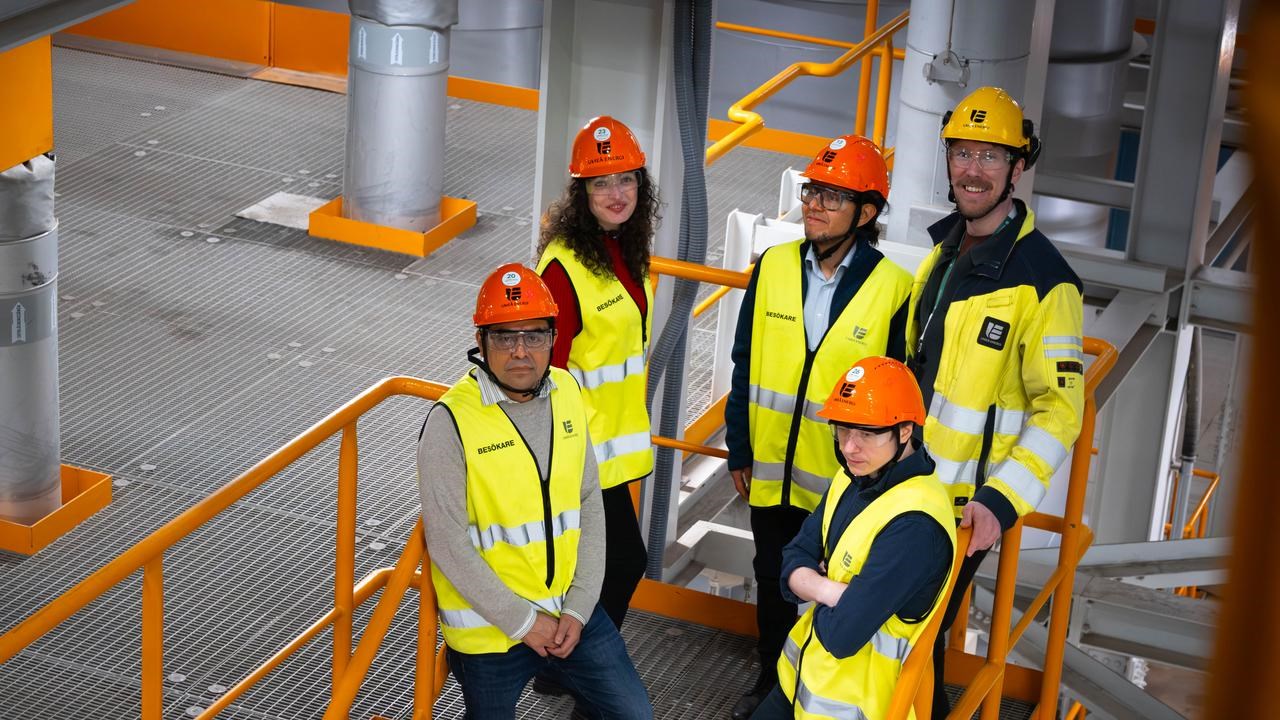
Umeå Energi and Umeå University in a new collaboration. From left: Juan Carlos Nieves Sanchez, AI specialist; Rachele Carli, postdoctoral researcher; and Esteban Guerrero Rosero, associate professor in computing science, together with Måns Kjellander, project manager at Umeå Energi and researcher Andreas Brännström from the Department of Computing Science.
ImageDavid FahlbergCombined heat and power plants form part of society’s critical infrastructure, where the requirements for reliability and robust operation are exceptionally high. Through this new collaboration, Umeå Energi aims to strengthen its preventive capabilities in day‑to‑day operations.
“At its core, this is about gaining time. By detecting deviations early, we improve our ability to act, reduce unplanned shutdowns, and secure the availability and delivery of heat to residents in Umeå,” says Måns Kjellander, Project Manager at Umeå Energi.
With new AI‑based methods developed at the Department of Computing Science, deviations in complex systems can be detected far earlier than today. This strengthens reliability and contributes to a more resilient energy supply. At the same time, the EU’s AI Regulation places strict requirements on the energy sector. Rachele Carli, postdoctoral researcher at the Department of Computing Science and legal expert at the AI Policy Lab at Umeå University, is therefore conducting a thorough analysis of the legal implications.
"Dåva is a safety‑critical facility, which means that all AI systems are automatically classified as high‑risk under the AI Regulation. We must therefore ensure full compliance with both national and European legislation," says Rachele Carli.
“In total, we must ensure that the systems meet high security requirements, including impact assessments, documentation, human oversight, traceability, and explainability,” says Juan Carlos Nieves Sanchez, who leads the project together with associate professor Esteban Guerrero Rosero and researcher Andreas Brännström, in collaboration with Umeå Energi.
The researchers are currently conducting focus groups, workshops and interviews with experts at the Dåva plant to gather knowledge about operations, processes and decision‑making. These insights are being transformed into structured knowledge models.
“The models are designed so that the system’s reasoning can be followed and explained step by step, making it possible to verify that the decision logic adheres to principles of transparency and risk minimisation,” says researcher Andreas Brännström, who works with knowledge modelling.
The EU’s new regulation entered into force in August 2024. AI systems used in energy supply, including combined heat and power plants, are classified as high‑risk under this framework.
Within the project, researchers are studying how an AI‑based decision-support system can be used to predict and prevent boiler leaks, with a particular focus on the Dåva plant – one of the world’s most energy-efficient and environmentally adapted facilities supplying heat equivalent to around 18 000 standard homes per year.
“An AI‑based decision support system is, in our view, a potential way forward to strengthen the most critical energy and heating infrastructure in the Umeå region. But it is crucial that this happens under responsible and safe conditions,” says Måns Kjellander, Project Manager at Umeå Energi.
"Being able to anticipate even minor issues is vital, he adds, as every shutdown incurs significant costs and affects availability."
The Department of Computing Science, which has grown at a record pace in recent years, conducts internationally recognised research in areas such as AI, autonomous systems, machine learning, privacy and robotics. This has clear knock‑on effects in education as well, where the focus on responsible AI is firmly grounded in solid expertise.
“We develop systems that do not pose a threat to people’s health, privacy, safety, or fundamental rights,” says Juan Carlos Nieves Sanchez, who is also one of the research leaders in the Responsible AI group and programme director for the Master’s Programme in Artificial Intelligence, which this year reached a record number of applicants.
The EU’s AI Act is the world’s first comprehensive legislation on artificial intelligence. It categorises AI systems into four levels of risk, with AI used in energy supply, including combined heat and power plants, classified as high‑risk.
“Working with prediction in the energy sector is not new. What is new here is combining it with artificial intelligence while embedding reliability and responsibility into the application. This may well represent a significant step forward in Sweden,” says Måns Kjellander, Umeå Energi.
Read more about the project "A trustworthy decision support system för energy management at Umeå Energi here." Please contact our project managers using the details below.