
Master's Programme in Public Health 120 credits
About the programme
Turn evidence into action for better and more equitable health
Public health decisions are rarely straightforward. Climate change, demographic change, rising healthcare costs and persistent health inequalities create interconnected challenges that involve uncertainty, limited resources and competing priorities.
As a public health professional, you need to assess evidence, make informed decisions and act in complex and changing contexts. This programme gives you a solid theoretical and scientific foundation in public health sciences, together with the knowledge and skills to understand these challenges and contribute to better and more equitable health.
Remember!
Citizens of the European Union (EU), the European Economic Area (EEA) and Switzerland are exempt from tuition fees.
Scholarships
There are a number of scholarships available for non-European students.
While studying
Evidence, equity and action
The programme is built around three interconnected themes: evidence, equity and action.
You will study epidemiology, quantitative and qualitative research methods, health economic evaluation and health economic modelling. You will learn how to generate and critically assess evidence, combine different forms of knowledge and apply scientific approaches to evaluating interventions, policies and health outcomes.
You will also explore how public health priorities are identified and translated into policy and practice. You will consider how evidence, values, resources and feasibility shape public health decisions, and learn how to use this understanding to inform action. You will examine how effectiveness, affordability and equity can be balanced in different contexts. This will help you understand not only what works, but also what is feasible and fair.
Implementation, leadership and health systems
Improving health requires more than identifying what works. You will develop skills in implementation, leadership and change, and learn how to translate knowledge and evidence into action.
You will examine public health challenges at individual, organisational and structural levels. You will explore the roles of different actors and sectors in shaping health and consider how interventions and health systems can be strengthened. This provides a basis for contributing to more effective and equitable health systems in different contexts.
An active and international learning environment
Our Pedagogical Vision of the Educational Environment is based on core principles and didactic strategies including active, collaborative, and reflective learning
Pedagogical Vision of the Educational Environment
You will study alongside students and teachers with a wide range of professional, academic and national backgrounds. The programme has attracted students from more than 70 countries, bringing a wide range of experiences and perspectives into discussions, group work and problem-solving. All teaching is in English.
You will take an active role in your learning by working with different types of evidence and perspectives, critically assessing public health questions and applying theoretical and methodological knowledge to practical challenges. Collaboration and reflection will help you develop independent thinking and the ability to use a scientific approach in practice.
The international environment will also help you explore how public health challenges vary across contexts and how different perspectives can inform decisions and action.
Description of the programme
This programme comprises of 120 credits (two years) and the first year includes courses on global health conditions, health systems analysis and health promotion. You will study the methods you need to carry out public health work; epidemiology, quantitative and qualitative methods and health economic modelling.
The second year builds on the first-year studies with courses on advanced research methods, health economic modelling and courses exploring health systems from economic, equity, critical, and leadership perspectives. There is an opportunity to graduate after one year, i.e., after 60 credits.
Master’s thesis
The master’s thesis work is an important part of the studies in this programme and gives you a possibility to apply the knowledge that you have gained to develop a deeper understanding and specialization within a chosen area. Our teachers are also researchers which means that you will have a supervisor who has experience in public health research. The thesis work comprises 30 credits within the programme’s main field of study and takes the form of two separate theses that are examined during semester 2 and semester 4 respectively.
Read more about the thesis work first year
Read more about the thesis work second year
Programme overview
First year
Second year
- Health Systems: Evidence, Equity and Action
- Qualitative Analysis: Principles and Practices
- Advanced Methods in Epidemiology
- Health Economic Modelling for Policy-Making
- Economics for Health Systems
- Critical Perspectives on Health Systems
- Leading Change in Public Health Practice
- Master Thesis, Second Year
Future and career opportunities
You will be prepared you for roles in public health practice, policy development, health system improvement, international organisations and research. You will graduate with the ability to critically assess evidence, navigate complexity and contribute to informed decisions and action for better and more equitable health.
This programme gives knowledge that can be used in NGO’s, public organisations, and private companies. Many graduates will work in the public sector in local and state institutions, from e.g., hospitals to the Ministry of Health. They may work with public health policies, health advocacy, legislation, management, evaluation of interventions or to analyse the effect of decisions on different levels.
Graduates can find jobs in non-profit organizations such as Red Cross, Save the Children, Médecins Sans Frontièrs or Clinton Health Access initiative. Other graduates will go to the private sector working e.g., for pharmaceutical companies or for health insurance companies. Others will work for the health minister or at WHO.
A future university career in research is another path since the programme is designed for those already working as, or planning to become, public health practitioners. Further studies can lead to a PhD degree.
How to apply to the programme and document your work experience
You can find general information on how to apply at the bottom of this page. Priority to this programme is given to students with at least two years of work experience within a field relevant to Public Health.
Apply
-
Autumn 2026
-
Master's Programme in Public Health
International admissions round
HT26 / Umeå / English / On campus
Show more Show less
StartAutumn term 2026
Number of credits120 credits
Type of studiesOn campus
Study pace100%
Length2 years
Study locationUmeå
LanguageEnglish
Application codeUMU-M3000
EligibilityA Bachelor's degree (equivalent to a Swedish Kandidatexamen) or an equivalent higher education of a minimum 180 higher education credits (ECTS), from an internationally recognised University, in Public Health, Healthcare, Health education, Pharmacy or a relevant field in Social or Behavioural Science. Proficiency in English equivalent to Swedish upper secondary course English 6/level 2.
SelectionPriority is given to students with at least two years of work experience within a field relevant to Public Health. Following this, applicants are ranked according to the number of academic credits completed by the last application date (in the range of 30-285 credits equivalent to ECTS)
DegreeAfter completing the programme, a student may apply for and obtain a Degree of Master of Science (120 credits). Main Field of Study: Public Health in accordance with the local degree description established by the Vice-Chancellor (see the Umeå University website).
ApplicationApplication deadline was 15 January 2026. The application period is closed.
Application and tuition feesAs a citizen of a country outside the European Union (EU), the European Economic Area (EEA) or Switzerland, you are required to pay application and tuition fees for studies at Umeå University.
Application fee: SEK 900
Tuition fee, first instalment: SEK 80,050
Total fee: SEK 320,200
-
Master's Programme in Public Health
Second admissions round for EU/EEA citizens
HT26 / Umeå / English / On campus
Show more Show less
StartAutumn term 2026
Number of credits120 credits
Type of studiesOn campus
Study pace100%
Length2 years
Study locationUmeå
LanguageEnglish
Application codeUMU-P3000
EligibilityA Bachelor's degree (equivalent to a Swedish Kandidatexamen) or an equivalent higher education of a minimum 180 higher education credits (ECTS), from an internationally recognised University, in Public Health, Healthcare, Health education, Pharmacy or a relevant field in Social or Behavioural Science. Proficiency in English equivalent to Swedish upper secondary course English 6/level 2.
SelectionPriority is given to students with at least two years of work experience within a field relevant to Public Health. Following this, applicants are ranked according to the number of academic credits completed by the last application date (in the range of 30-285 credits equivalent to ECTS)
DegreeAfter completing the programme, a student may apply for and obtain a Degree of Master of Science (120 credits). Main Field of Study: Public Health in accordance with the local degree description established by the Vice-Chancellor (see the Umeå University website).
ApplicationApplication deadline was 15 April 2026. The application period is closed. Please note: This second application round is intended only for EU/EEA/Swiss citizens.
Application and tuition feesAs a citizen of a country outside the European Union (EU), the European Economic Area (EEA) or Switzerland, you are required to pay application and tuition fees for studies at Umeå University.
Application fee: SEK 900
Tuition fee, first instalment: SEK 80,050
Total fee: SEK 320,200
-
-
Autumn 2027
-
Master's Programme in Public Health
International admissions round
HT27 / Umeå / English / On campus
Application opens 16 October 2026Show more Show less
StartAutumn term 2027
Number of credits120 credits
Type of studiesOn campus
Study pace100%
Length2 years
Study locationUmeå
LanguageEnglish
Application codeUMU-M3000
EligibilityA Bachelor's degree (equivalent to a Swedish Kandidatexamen) or an equivalent higher education of a minimum 180 higher education credits (ECTS), from an internationally recognised University, in Public Health, Healthcare, Health education, Pharmacy or a relevant field in Social or Behavioural Science. Proficiency in English equivalent to Swedish upper secondary course English 6/level 2.
SelectionPriority is given to students with at least two years of work experience within a field relevant to Public Health. Following this, applicants are ranked according to the number of academic credits completed by the last application date (in the range of 30-285 credits equivalent to ECTS).
DegreeAfter completing the programme, a student may apply for and obtain a Degree of Master of Science (120 credits). Main Field of Study: Public Health in accordance with the local degree description established by the Vice-Chancellor (see the Umeå University website).
ApplicationThe online application opens 16 October 2026 at 13:00 CET. Application deadline is 15 January 2027.
Application and tuition feesAs a citizen of a country outside the European Union (EU), the European Economic Area (EEA) or Switzerland, you are required to pay application and tuition fees for studies at Umeå University.
Application fee: SEK 900
Tuition fee, first instalment: SEK 80,050
Total fee: SEK 320,200
-
Master's Programme in Public Health
Second admissions round for EU/EEA citizens
HT27 / Umeå / English / On campus
Application opens 15 March 2027Show more Show less
StartAutumn term 2027
Number of credits120 credits
Type of studiesOn campus
Study pace100%
Length2 years
Study locationUmeå
LanguageEnglish
Application codeUMU-P3000
EligibilityA Bachelor's degree (equivalent to a Swedish Kandidatexamen) or an equivalent higher education of a minimum 180 higher education credits (ECTS), from an internationally recognised University, in Public Health, Healthcare, Health education, Pharmacy or a relevant field in Social or Behavioural Science. Proficiency in English equivalent to Swedish upper secondary course English 6/level 2.
SelectionAcademic credits awarded by application deadline (HPAV 30-285 ECTS)
Priority is given to students with at least two years of work experience within a field relevant to Public Health. Following this, applicants are ranked according to the number of academic credits completed by the last application date (in the range of 30-285 credits equivalent to ECTS).
DegreeAfter completing the programme, a student may apply for and obtain a Degree of Master of Science (120 credits). Main Field of Study: Public Health in accordance with the local degree description established by the Vice-Chancellor (see the Umeå University website).
ApplicationThe online application opens 15 March 2027 at 13:00 CET. Application deadline is 15 April 2027. Please note: This second application round is intended only for EU/EEA/Swiss citizens.
Application and tuition feesAs a citizen of a country outside the European Union (EU), the European Economic Area (EEA) or Switzerland, you are required to pay application and tuition fees for studies at Umeå University.
Application fee: SEK 900
Tuition fee, first instalment: SEK 80,050
Total fee: SEK 320,200
-
How to apply
Apply online via universityadmissions.se
You apply to our programmes and courses via universityadmissions.se – the official website for higher education applications in Sweden. There, you can track your application, check that your documents have been registered, and log in to find our your admission results.
Late applications
Admissions to most programmes and courses typically close after the final application deadline. However, some programmes and courses may still accept late applications if seats are available. These are marked “Open for late application” on universityadmissions.se. Please note that late applications are not guaranteed to be reviewed.
More about application and admission
Film about the programme
Are you passionate about promoting health, understanding social factors and shaping effective healthcare systems globally? Meet our students Isa Maria dos Santos Resende and Yonas Taye, and our teachers, Kristina Lindvall and Masoud Vaezghasemi.

Voices about the programme
-

I needed to learn more to make a positive impact
Alumni
It was one particular experience in Nigeria that led Obinna Anyatonwu to pursue public health studies in Umeå.

Research excellence at Umeå University
Be a part of a world-class environment for teaching and research – where the Nobel Prize-winning discovery of CRISPR-Cas9 geneediting began, and where innovation continues to shape the future.
-
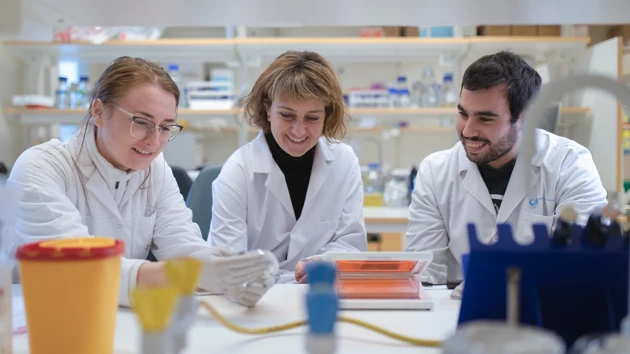
Innovative with international impact
Research for society, nature and the future. Read about our research research environments and infrastructure.
-
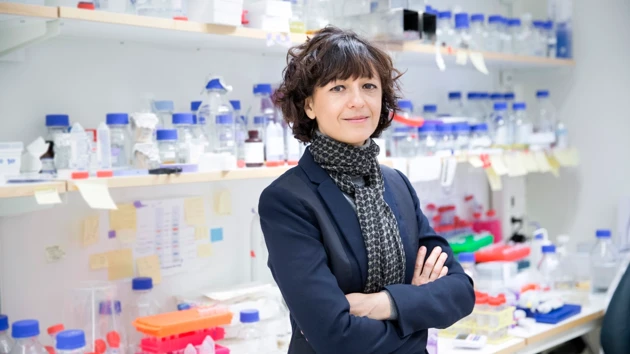
Open climate for groundbreaking research
Emmanuelle Charpentier credits the research environment in Umeå as a key factor in her discovery.


Contact us
Your message goes to Infocenter, and they’ll make sure it gets to the right person – so you get the best and most relevant reply.
Programme is given by
Department of Epidemiology and Global Health
Good to know

How to apply
A step-by-step guide to apply for studies at Umeå University.

Ways to meet Umeå University
Join us at webinars and student fairs – ask questions and explore your future!

Experience Umeå
Northern Sweden’s largest city – diverse, dynamic, and student-friendly.