

NEWS Uncovering overlooked aspects of Sámi history, disrupting bacteria’s hiding places and using AI to detect aggressive prostate cancer are just some of the aims of 21 EU-funded projects involving researchers at Umeå University.
Researchers will also investigate how environmental pollution affects the brain throughout life and how culture can help create greener urban neighbourhoods. Other initiatives will open the door to advanced supercomputers and give school pupils opportunities to meet researchers.
Umeå University has been awarded a total of nearly €9.9 million under the 2025 funding calls. This is equivalent to around SEK 110 million. Some projects are led from Umeå, while in others, university researchers are partners in European collaborations.
The funding comes mainly from Horizon Europe, the EU’s framework programme for research and innovation, but also from Erasmus+ Sport.
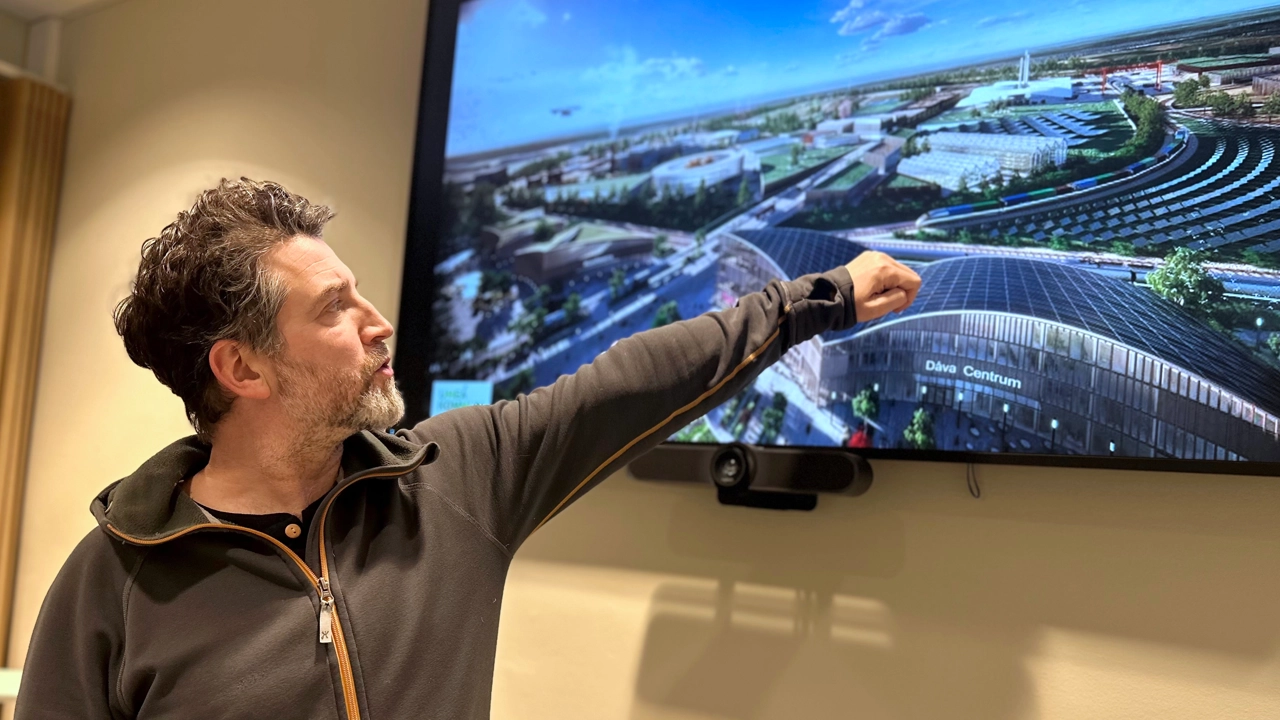
Surplus heat from industry could help make local fish and shrimp farming possible in northern Sweden. Through the CIRCUIT project, Olivier Keech is exploring how resources that would otherwise go to waste can be put to use, and how cities and industries can work together to create a more sustainable society.
ImageStephanie RobertExpand the headings to learn more about the projects, grouped by funding programme.
SESAME brings an overlooked chapter of Sámi history to light
We often associate the Sámi with reindeer herding and life in the mountains and forests. Yet Sámi people have also long lived in farming communities where other groups formed the majority. SESAME aims to explore this lesser-known part of Sámi history before 1900.
Where did Sámi people live in these farming areas, what was everyday life like and what prompted them to move? The researchers will piece together their histories and explore how Sámi identity changed through contact with the surrounding society. They also plan to trace connections between Sámi groups in Sweden, Norway and Finland.
In search of answers, the project brings together historical sources, linguistics, archaeology and analysis of landscapes and geographical data. The researchers will also develop methods for locating and investigating former Sámi dwelling sites.
By highlighting the role of Sámi people in past farming communities, SESAME seeks to offer a fuller picture of rural history in northern Europe. The findings could lay the foundations for future research on the Sámi and other groups whose histories have long received less attention.
Researcher: Gudrun Norstedt, Várdduo – Centre for Sámi Research
Funding awarded: €1,234,258
INCLUSION-INTEGRITY aims to break open bacteria’s hideout
Some bacteria can enter our cells and hide inside a protected compartment, allowing them to evade parts of the cell’s defence system. What if we could fight these bacteria by disrupting their hideout?
Project INCLUSION-INTEGRITY focuses on Chlamydia trachomatis, a bacterium that causes eye and genital infections. Once inside our cells, the bacterium resides within a membrane-bound compartment called the inclusion. This protective hideout helps it avoid detection by the cell’s surveillance and defence machinery.
Using advanced microscopy, protein and lipid analyses, and genetic techniques, the researchers will investigate what keeps the inclusion stable and how it can be deliberately destabilised and broken down.
But what happens to the infected cell when this hideout is disrupted? The researchers will examine under which circumstances the deliberate destruction of the inclusion can either eliminate the bacterium from the infected cell or instead trigger the death of the host cell. They will also determine which of these outcomes may be the most beneficial for treatment.
In the long term, this knowledge could pave the way for new and more targeted therapies against infections caused by bacteria that hide inside our cells.
Researcher: Barbara Sixt, Department of Molecular Biology
Funding awarded: €2,000,000
DataGenChrono explores the links between sleep, genes
and mental health
Why do some people find it easier than others to sleep well and maintain a regular daily rhythm? And how is this linked to mental health? DataGenChrono is seeking answers in our genes and in information about light exposure, sleep and activity.
Using large genetic datasets, the researchers will investigate variations that could help explain why people have different sleep patterns and why their body clocks work differently.
A key question is what causes what. Could certain genetic variants contribute to disrupted sleep and circadian rhythms, which in turn affect mental health? Or could genetic variants increase the risk of poor mental health, which then affects sleep and circadian rhythms?
The researchers will also examine whether these relationships change with the seasons or at different stages of life. In the longer term, the findings could inform new approaches to sleep and circadian rhythms in healthcare and public health.
Twelve partners from eight countries are working together to train eleven doctoral researchers in fields including genetics, data analysis, sleep research, chronobiology and science communication.
Researcher: Katharina Wulff, Department of Molecular Biology
Funding awarded to Umeå University: €324,630
Total project budget: €3,587,964
NICEST will map molecular fingerprints
What is a distant planet’s atmosphere made of? Which substances form when a fuel burns? NICEST will develop new ways to read molecular fingerprints in light and understand chemical processes both in space and here on Earth.
When light passes through a gas, its molecules leave characteristic patterns in the light, much like fingerprints. Comparing these patterns with precise measurements of known molecules makes it possible to identify the substances in the gas. However, many molecular fingerprints are not yet known with sufficient accuracy. This makes the molecules harder to detect, for example in the atmospheres of planets beyond our solar system.
NICEST will develop instruments that use optical frequency combs, light sources with many precisely defined frequencies. Through rapid, precise measurements, the researchers aim to produce better reference data for identifying molecules.
The instruments will also be used to study chemical reactions, for example during combustion and in industrial processes. In the longer term, the results could improve environmental monitoring, deepen our understanding of chemical processes that affect the climate and contribute to cleaner technologies.
The project brings together research groups and industry partners from across Europe and will train eleven doctoral researchers in laser science, molecular physics, chemistry and data analysis.
Researcher: Aleksandra Foltynowicz, Department of Physics
Funding awarded to Umeå University: €865,680
Total project budget: €4,483,106
SPARK develops new ways to control light
As computers, communication systems, AI and future 6G networks handle ever-increasing volumes of information, technology must become both faster and more energy-efficient. Light could play a vital role in this development. SPARK will therefore develop new ways to control light in both space and time.
Light is already central to today’s digital society: optical fibres carry internet traffic around the world, while photonic chips combine optical and electronic components to process information. However, current technologies limit how rapidly and flexibly light can be controlled, as well as how energy-efficient these systems can become.
SPARK will investigate how light interacts with matter in metamaterials – materials with specially designed structures that shape how light behaves. The researchers aim to use this knowledge to develop advanced, sustainable optical technologies capable of controlling properties such as the direction and frequency of light with exceptional speed and precision.
As a European doctoral network, SPARK will train 15 doctoral candidates to combine advanced materials and quantum technologies with photonics, the science and technology of generating, controlling and using light. Collaboration between universities and industry gives them opportunities to work on both fundamental research and potential technological applications.
In the longer term, these technologies could enable new solutions for high-speed computing, advanced imaging and communications.
Researcher: Nicolò Maccaferri, Department of Physics
Funding awarded to Umeå University: €649,260
Total project budget: €4,550,414
CHIME-Z controls bacteria with light
Bacteria can be engineered to produce useful substances, including biofuels. But growth and production compete for the bacteria’s resources. CHIME-Z aims to develop a switch that controls when the bacteria grow and when they produce fuel, allowing them to use those resources more efficiently.
The technology, known as chemo-optogenetics, combines light with small molecules to switch specific genes on and off with great precision. Using mathematical modelling and genetic engineering, the researchers will build and test this type of control system in the bacterium Zymomonas mobilis.
The goal is to enable the bacterium to convert forestry and agricultural residues into biofuel as efficiently as possible. The process will then be refined and scaled up in bioreactors. If the technology also works at a larger scale, CHIME-Z could pave the way for more efficient and sustainable production of biofuels and other substances using microorganisms.
Researchers: Yaowen Wu and Harshit Malhotra, Department of Chemistry
Funding awarded: €252,180
NEUROVISTA traces a virus through the brain
The brain is well protected from the outside world – so well that medicines can sometimes struggle to reach it. NEUROVISTA will investigate what happens when herpesvirus infects the brain and whether nanoparticles can help antiviral medicines reach their target.
The herpes simplex virus HSV-1 can cause inflammation of the brain. Researchers are also exploring possible links with diseases in which nerve cells gradually become damaged, such as Alzheimer’s disease. Treating infections in the brain is far from straightforward. One obstacle is the blood-brain barrier, which protects the brain from harmful substances but can also prevent enough medicine from getting through.
The NEUROVISTA researchers will use advanced microscopy to produce three-dimensional images of the whole brain, allowing them to see how the virus spreads and where inflammation occurs. They will also develop nanoparticles made from albumin, a protein found in blood plasma, and explore whether these can carry antiviral medicines to infected areas of the brain.
The nanoparticles will be tested in both cell and animal models. By combining virology, neuroscience, drug development and advanced imaging, NEUROVISTA hopes to provide new knowledge about virus-induced inflammation in the brain and lay the foundations for more targeted treatments.
Researchers: Stefanie Ahlgren Willekens and Mayra Alejandra Castañeda Cataña, Department of Clinical Microbiology
Funding awarded: €236,340
STAVE OFF investigates the sticky weapons of bacteria
In hospitals, the bacterium Enterococcus faecalis can cause infections that are difficult to treat. It can cling to damaged tissue, build protective biofilms and help antibiotic resistance spread between bacteria.
A key to the bacterium’s success is PrgB, a sticky protein on its surface that acts rather like molecular Velcro. It helps the bacterium attach to human tissue and form biofilms – protective layers in which bacteria can live together. The protein also holds bacteria together while they exchange resistance genes.
But what exactly does this molecular Velcro stick to? The researchers want to identify which molecules in the body PrgB binds to, measure the strength of those interactions and reveal how the molecules fit together.
With this knowledge, the researchers hope to develop new strategies for tackling infections caused by enterococci and other Gram-positive bacteria – and contribute to the fight against antibiotic resistance.
Researchers: Ronnie Berntsson and Taylor Devlin, Department of Medical Chemistry and Biophysics
Funding awarded: €236,340
WHISPER explores how plants transmit information
Plants need to sense their surroundings to adapt their growth. The walls surrounding plant cells provide strength and support but may also help transmit information through the plant. WHISPER investigates what happens when cell walls are subjected to small mechanical forces.
Cell walls form a continuous network throughout a plant’s tissues. Changes in their structure can trigger signals that affect how the plant grows. But how small a change can a plant detect? And can a change in the mechanics of a cell wall spread through the network and trigger a response further away?
To find answers, the researchers need to be able to alter cell walls at specific locations. This is difficult with existing methods. WHISPER will therefore develop new tools to make controlled changes and monitor the plant’s responses. The researchers will also examine the walls’ mechanical properties and chemical composition.
The aim is to understand how mechanical and chemical signals work together to regulate plant growth. The findings could clarify the role of cell walls in transmitting information and provide new methods for both fundamental and applied plant research.
Researchers: Laura Bacete Cano and Bastien Dauphin, Umeå Plant Science Centre
Funding awarded: €236,340
ForskarFredag brings research and people together across Sweden
How does research actually work? And what does it have to do with our everyday lives? During ForskarFredag, people across Sweden can meet researchers, try experiments and explore science up close. Umeå University and Curiosum are taking part in the national initiative, which has received EU funding for activities in 2026 and 2027.
Forskarfredag brings science to audiences in 28 cities across Sweden, with everything from experiments and debates to shows and science cafés. The festival is coordinated nationally by the non-profit organisation VA, Public & Science, working with local organisers across the country.
Children and young people aged 6–19 are a particularly important audience. Through the Borrow a Researcher school programme, pupils can meet researchers either in person or online. A new initiative, Researcher Returns Home, will give a further 7,000 pupils in rural areas the chance to meet researchers in person.
ForskarFredag will celebrate its 20th anniversary in 2026 and is also part of the European Researchers’ Night initiative. Over the two project years, the programme is expected to involve around 61,500 participants and 1,200 researchers in Sweden.
Researcher: Madelen Bodin, Curiosum
Funding awarded to Umeå University: €16,486
Total project budget: €350,000
RISE-UP BIO opens up advanced biotechnology to more users
Developing new biotechnology solutions can require advanced equipment and specialist expertise that research groups and businesses do not always have. RISE-UP BIO will therefore make Europe’s biotechnology research infrastructures more accessible and easier to use.
The project brings together 24 organisations from eleven EU Member States and one associated country. Collectively, they offer more than 700 services, ranging from designing microorganisms to analysing and developing biological processes.
Users might gain access to specialised analytical equipment, receive help developing and testing a biological process, or explore how it works at a larger scale. Both academic researchers and businesses can apply to use the infrastructure, while small and medium-sized enterprises will be able to protect their intellectual property. The project will also make it easier to combine services from different research facilities.
More than half of the project’s budget is intended to give researchers and businesses access to services at the participating facilities. RISE-UP BIO also aims to make research data easier to describe and share consistently, and provide training for users and staff.
The aim is to make Europe’s biotechnology research resources more connected and useful, strengthening development in fields including energy, the environment, materials, health and food.
Researcher: Regina Kolzenburg, Department of Ecology, Environment and Geoscience
Funding awarded to Umeå University: €12,544.25
Total project budget: €5,001,422
SHIELD investigates how pollution affects the brain
Can environmental pollution affect our brains before we are even born? SHIELD will explore the links between pollution and brain health across the entire lifespan, from the foetal stage to old age.
The researchers will link large, long-running population studies from across Europe with information about brain function, cognitive abilities, genetics, lifestyle and social conditions. They will also map people’s past and present exposure to different environmental pollutants.
At what stages of life is the brain particularly vulnerable to pollution, and what role do our genes and living conditions play? By comparing data from different life stages, the researchers aim to understand how these factors interact and how risks can build up over time. This could offer new clues to the links between environmental pollution and conditions such as ADHD and dementia.
The aim is to produce a European roadmap for protecting brain health, with recommendations that take both age and equity into account. The researchers hope that this knowledge can support better environmental and public-health measures and help reduce health inequalities between different groups in society.
Researcher: Anna Oudin, Department of Epidemiology and Global Health
Funding awarded to Umeå University: €714,787.50
Total project budget: €7,000,000
Nordic PCPM Forum seeks clues to guide prostate cancer treatment
Which treatment is most likely to help an individual patient with prostate cancer? The answer may lie in the tumour’s molecules. Nordic PCPM Forum is looking for biological markers that could help doctors choose the right treatment and reduce the risk of unnecessary side effects.
The researchers combine information about genes, gene activity and substances produced by cellular metabolism. Together, this information can provide clues about how a tumour behaves and which treatments are most likely to be effective. Such biological characteristics are known as biomarkers.
The project will refine and test combinations of biomarkers using patient samples and data. Working with the Swedish research infrastructure SPRINTR, the researchers will also explore how their findings can be put into practice in healthcare.
Umeå University coordinates the collaboration between seven partners in Sweden, Norway, Denmark and Finland. It brings together researchers, technology experts and patient representatives. They will also examine patients’ perspectives, health economics and what is needed to introduce new approaches into clinical practice.
The goal is for more patients to receive treatment tailored to their disease, with better outcomes and fewer unnecessary side effects.
Coordinator: Andreas Josefsson, Department of Diagnostics and Intervention
Funding awarded to Umeå University: €245,520
Total project budget: €1,603,720
ASCLEPIUS develops AI assistants for safer care
Can AI provide better support for patients after a hospital stay while easing the workload for healthcare staff? ASCLEPIUS is developing digital assistants to monitor patients’ symptoms, make healthcare information easier to understand and simplify documentation.
One part of the project focuses on documentation during and after a hospital stay. The AI assistants will help healthcare staff prepare clinical notes and discharge summaries. Patients will receive their own summaries in language they can understand, explaining the care they have received and the advice they need to follow at home.
Once home, patients will be able to talk to a digital assistant about their symptoms and how they are managing everyday life. This information will be brought together so that healthcare staff can monitor their progress. The aim is to detect problems early and reduce the risk of patients needing to return to hospital.
Umeå University contributes theoretical knowledge and tools to help AI support communication between doctors and patients. The technology is being developed with healthcare staff, patients and social science experts. A key requirement is that the assistants can explain their answers and indicate when they are uncertain. Their assessments must also be open to review, with clear rules specifying when healthcare staff need to take over. The purpose is to support clinical judgement, not replace it.
The project’s 17 partners will test the solutions in areas including rehabilitation, intensive care, neurology and internal medicine. The aim is a flexible platform that can work with different electronic health record systems and be adapted to hospitals’ needs, while meeting high standards of security and protecting patients’ privacy.
Researcher: Frank Dignum, Department of Computing Science
Funding awarded to Umeå University: €900,017.50
Total project budget: €19,994,911
FAMCAREER explores inequalities in parents’ working lives
Having children generally affects mothers’ and fathers’ working lives differently. Mothers are more likely to take career breaks, reduce their working hours and experience slower wage growth. FAMCAREER explores how these differences arise, what they mean for family well-being and how they can be reduced.
The researchers will follow how parents combine work and caring for children over time. They will also examine how one parent’s decisions affect the other’s opportunities. What role do the workplace and access to childcare play? And how do opportunities differ between families with different backgrounds and circumstances?
Inequalities at work can have consequences for the whole family, affecting finances, health, relationships and children’s upbringing. To understand how these differences emerge and change throughout life, the researchers will combine administrative data and surveys with repeated interviews with couples. They will also investigate what shapes workers’ and employers’ decisions.
The project brings together nine partners to compare circumstances across countries. This includes examining how workplaces and policy decisions can make it easier or harder for parents to combine work and family life. The findings will inform an interactive tool developed together with those involved and affected. It is intended to help policymakers and employers choose measures that can reduce inequalities and improve family well-being.
Researchers: Anna Baranowska-Rataj, Centre for Demographic and Aging Research, and Emelie Hane-Weijman, Department of Geography
Funding awarded to Umeå University: €354,841.55
Total project budget: €3,399,843
SEAIF opens the door to supercomputers and AI support in Sweden
AI is developing rapidly, but training advanced AI models requires vast amounts of data, computing power and expertise that are not available to everyone. The Sweden AI Factory (SEAIF) will give researchers, businesses and the public sector in Sweden free access to these resources.
SEAIF combines powerful supercomputers designed for AI with expert support to help users develop their ideas. This can include defining a problem, preparing data, choosing tools for training a model or identifying training needs.
The resources are intended for use across many fields, ranging from life sciences and materials science to autonomous systems and computer games. SEAIF will work with EuroHPC-JU and other European AI initiatives to make it easier to share data across borders and to help users comply with relevant EU regulations.
Through this work, SEAIF aims to strengthen Sweden’s role in European AI development.
Researcher: Paolo Bientinesi, Department of Computing Science
Funding awarded to Umeå University: €650.100
Total project budget: €19,584,751
DIVERSIFY4Future explores new ways to make aquaculture
more sustainable
Can fish and other aquatic species be farmed together in ways that make better use of resources? DIVERSIFY4Future is exploring how a wider range of species and smarter farming systems can reduce waste and contribute to more sustainable food production.
The project explores integrated aquaculture, in which different species are farmed together and can make use of one another’s by-products. Alongside farming fish, crustaceans and aquatic plants, researchers will test a range of established and emerging low-trophic species – those lower down the food chain. Their goal is to develop farming systems that use resources more efficiently, reduce waste and are better equipped to cope with a changing climate.
But sustainable food production involves more than what happens on the farms themselves. The project will also examine economics, legislation, the conditions faced by producers and consumers’ views of unfamiliar species as food.
By bringing together biological, technical and social perspectives, the project aims to understand what it will take for sustainably farmed species, including new ones, to find their place on European markets and dinner tables in the future.
Researcher: Olivier Keech, Department of Plant Physiology
Funding awarded to Umeå University: €164,997.50
Total project budget: €6,553,180
CIRCUIT helps cities and industries work towards climate neutrality
Industry is vital to Europe’s economy, but it also produces substantial emissions and consumes large amounts of energy and raw materials. CIRCUIT will explore how cities and industries can work together to reduce their climate impact and make better use of resources.
When an industrial site changes, the effects extend beyond the factory itself. Energy, transport, land use, waste and water are all connected to the surrounding community. CIRCUIT will therefore look at the entire area as an interconnected system.
The project will develop new ways for businesses, local authorities and other local stakeholders to plan and make decisions together. Its tools include digital twins – virtual models of real-world systems. These allow participants to test different options and assess their effects on energy use, transport and resource flows. For example, they could explore how surplus heat from industry might support sustainable farming. The idea is to find new uses for resources that would otherwise go to waste.
CIRCUIT combines digital technology with research and development and encourages dialogue among local stakeholders. The aim is to help them turn climate targets into practical action and develop solutions that can be adapted for use elsewhere in Europe.
Researcher: Olivier Keech, Department of Plant Physiology
Funding awarded to Umeå University: €259,781.25
Total project budget: €9,337,856
CareFabric aims to support the green transition in cities through culture
How can cultural participation make people more involved in shaping the area where they live? CareFabric is exploring how culture, participation and a sense of community can help create greener and more socially sustainable neighbourhoods.
For a green transition to take root, people need to feel they have a say in the changes happening where they live. CareFabric explores the role that culture and creative activities can play in this process.
In four European pilot areas, researchers, local authorities, cultural organisations and residents will test ideas together. These areas serve as urban laboratories, where the project explores how cultural activities, meeting places and new collaborations can strengthen local relationships and engagement.
CareFabric brings together 17 European organisations from research, the public sector, culture and civil society. It aims to develop a model that can be used elsewhere and show how cultural participation can contribute to Europe’s green transition, with a focus on sustainability, inclusion and attractive living environments in line with the principles of the New European Bauhaus.
Researcher: Katrin Holmqvist Sten, Umeå School of Architecture
Funding awarded to Umeå University: €156,250
Total project budget: €2,999,939
PROMETHEUS uses AI for more accurate prostate cancer diagnosis
Prostate cancer can develop very differently from one person to another. Some tumours are aggressive and may require rapid treatment, while others grow so slowly that treatment may never be needed. PROMETHEUS will use AI to bring together several types of information and help physicians make better-informed assessments.
Physicians currently need to interpret information from sources including MRI scans, PET/CT images, medical records and long-term follow-up. PROMETHEUS aims to develop an AI-based model that can identify connections between these different sources and use them to assess the risk of aggressive prostate cancer.
The system is designed to explain its assessments, while physicians remain in control of decisions. The researchers will also develop methods for creating synthetic MRI images – computer-generated images that resemble those from real scans. This could make imaging data easier to share for research while protecting patients’ privacy.
Six European research centres, including Umeå University, are contributing patient data and specialist expertise. Together, their material covers more than 20,000 patients.
The aim is to improve diagnostic accuracy, helping doctors identify aggressive prostate cancer while reducing the risk of overdiagnosis. The model is also intended to support treatment decisions tailored to each patient.
Researcher: Andreas Josefsson, Department of Diagnostics and Intervention
Funding awarded to Umeå University: €352,745.85
Total project budget: €3,979,618
CARE helps sports coaches develop their careers
Sports coaches devote themselves to developing others – but what happens to their own careers? Working conditions in coaching can be insecure. Women also remain underrepresented, and the number of women leaving the profession is a major challenge.
CARE aims to develop career guidance tailored specifically to sports coaches, through a partnership between Umeå University and sports organisations in Finland and Slovenia. The project will produce new knowledge and practical recommendations to help coaches develop their skills, strengthen their position in the labour market and build sustainable careers.
CARE also aims to open up routes into coaching and help people from different backgrounds stay in the profession and develop their skills. The international partnership gives the participants the chance to make connections and learn from one another across borders.
Researchers: Taru Tervo and Apostolos Theos, Umeå School of Sports Sciences and Department of Community Medicine and Rehabilitation
Funding awarded to Umeå University: €10,984
Total project budget: €60,000