
Bachelor Programme in Industrial Design 180 credits

About the programme
The Bachelor Programme in Industrial Design supports students in taking ideas from vision to reality through a creative and life‑centred design process. The programme emphasises sustainable and norm‑critical design practices that address social and ecological challenges, encouraging students to imagine responsible and resilient futures. Throughout the programme, students develop and refine artistic abilities, physical and digital skills, analytical thinking and critical reflection.

Student work
Discover designs created by our BFA Industrial Design students
While studying
Your first year focuses on the essentials of industrial design, combining sketching, prototyping and practical techniques in both workshops and digital labs. In the second year you broaden your perspective by applying interaction, systems and participatory design, while beginning to explore service design and research‑informed methods. In the final year you bring your skills together, define your voice and deliver an independent project that reflects your ambitions as an industrial designer.
Throughout all three years you collaborate on live projects with companies, public organisations and civic partners, learning to respond to complex real‑world contexts with curiosity, creativity and a strong sense of responsibility.
Industry-like design studios
All programmes are housed in industry‑like design studios where each student has an individual workspace. The shared spaces, including workshops, computer labs, paint rooms, the photo studio and the libraries, create supportive and innovative learning environments shaped by a strong collaborative spirit.
24/7 access to facilities
Students have access to the school facilities around the clock, whether it is a weekday, weekend, day or night. The workshops include 3D printers, laser cutters, milling machines, paint rooms and a wide range of additional tools that support hands-on exploration. Our digital infrastructure features multiple computer labs and studios, enabling students to develop skills in 3D modelling, digital sketching, electronic prototyping and programming.
Applied design courses
Applied design projects form the backbone of the Bachelor Programme in Industrial Design. These projects bring together lectures, field trips, site visits, group method work, user studies and studio practice. Many are carried out in collaboration with external partners, and students receive tutoring from both our own teachers and visiting professional designers. The projects you engage in are human and more‑than‑human centred, grounded in the needs of specific user groups rather than traditional product categories.
Design techniques
Between major project periods, you will take in‑depth courses that strengthen your design practice across a range of techniques, including:
- Sketching and visualisation
- Form and colour studies
- Model making and workshop techniques
- Communication strategies
- Digital 3D modelling (CAID)
- Material exploration
- Physical and digital prototyping
Collaborative degree projects
The second half of the sixth and final term is devoted entirely to the examination project. You will carry out this project in cooperation with a corporate sponsor or another external partner. The work is treated as a collaboration rather than a commission, allowing you to explore your own design direction while engaging with real‑world needs. You are expected to define a clear problem area, establish contact with an external partner and develop a project brief that outlines your aims, methods and anticipated deliverables.
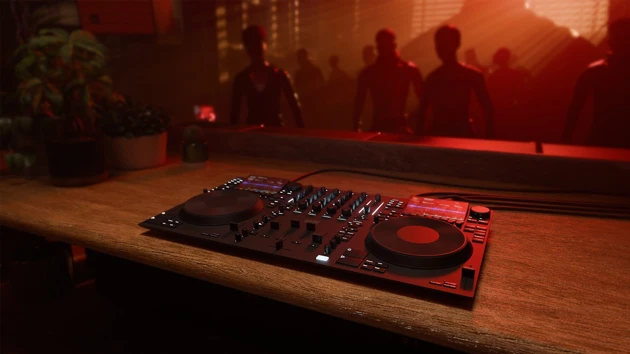
A design student’s answer to DJ stage fright
In his degree project Viktor Strömberg has explored how DJs can build confidence and joy in live performance.
Courses in the programme
Year 1
• Becoming a designer: Introduction
• Exploration of form and materials
• Design expression 1
• Design studies 1
• Designing for functionality
• Designing for people
• Design expression 2
• Design studies 1
Year 2
• Exploration of interaction and experience
• Designing with people
• Design expressions 3
• Design studies 3
• Becoming a designer: Practice
• Designing together
• Design expressions 4
• Design studies 4
Year 3
• Exploration of design (as) research
• Designing design: Immersion
• Becoming a designer: Direction
• Design expressions 5
• Design studies 5
• Designing design: Articulation
• Degree project in design
• Being a designer: Reflection
Future and career opportunities
The programme’s close ties with companies, including a ten-week internship, make students highly attractive in the job market. Graduates go on to work as industrial designers in diverse fields, from consumer products to healthcare, mobility and digital experiences. Many join leading design consultancies or international companies, while others pursue entrepreneurial paths or continue to advanced studies.
Master's programmes
Exchange studies
The BFA Programme in Industrial Design is open to exchange students on a one-term basis. For more information on how to apply, please visit the website for exhange studies.
Programme director

Apply
Film about the programme
Are you curious to know more about industrial design? Do you want to know how it to work as an industrial designer?

Voices about the programme
-

Joakim Englander is shaping the future of gaming
Alumni
Following his degree in Industrial Design from UID Joakim Englander is one of two concept designers at DICE responsible for the hardware of the game Battlefield.
-

Kim is shaping future materials
Alumni
After graduating Kim Onchoi Stenmark built a career around how to create products and systems that use resources more responsibly.


Frequently asked questions
How well should I be able to communicate in English?
You need proficiency in English equivalent to the Swedish upper secondary course English 6.
Read more about English language requirements at University Admissions
Do I need to be able to speak Swedish to study at Umeå Institute of Design?
No. The BFA Programme in Industrial Design is taught entirely in English. English is also the primary language used for everyday communication and information at Umeå Institute of Design.
Are there any grants or scholarships for design students?
Students who are citizens of countries outside the EU, EEA or Switzerland are generally required to pay application and tuition fees. Scholarships and tuition fee reductions may be available to eligible students.
Please note that the Design by Umeå scholarship is not available to bachelor’s students.
Read more about tuition fees and scholarships
What are the entry requirements?
You must meet the general entry requirements for bachelor’s-level studies in Sweden, including the English language requirement. The documents you need to submit may depend on the country in which you completed or are completing your upper secondary education.
Admission to the programme also requires approved work samples and an approved interview.
Academic documents must be submitted through University Admissions.
Find out what you need to submit based on your country of study
Read more about applying for bachelor’s-level studies
Do I need previous experience in industrial design?
No. Previous university studies or professional experience in industrial design are not required.
Selection is based on your work samples, letter of motivation and, if you are shortlisted, an interview. We assess your artistic potential, design aptitude, analytical ability, creativity, visual communication skills and capacity to think critically about design.
If you have previous design experience or other relevant work or volunteer experience, you are encouraged to mention it in your letter of motivation.
What should my work samples contain?
The BFA Programme in Industrial Design has a programme-specific work sample assignment. The work samples normally include assigned tasks, free work and a separate letter of motivation.
Your submission should demonstrate how you explore and understand a task, develop ideas, solve problems and communicate visually. It should also show your understanding of form, three-dimensional thinking, creativity and ability to question underlying norms and assumptions.
The assignment and detailed submission instructions are published on the programme’s admission page for each application round.
Read the work sample instructions for the BFA Programme in Industrial Design
Do I submit an existing portfolio or complete a specific assignment?
You must complete the programme-specific work sample assignment for the relevant application round. We do not accept an existing general portfolio as a replacement for this assignment.
The submission normally includes assigned tasks, free work and a separate letter of motivation. Always follow the current instructions regarding content, format and submission. Previous assignments should only be used as references, as requirements may change between application rounds.
How do I apply?
The application is completed in two steps:
- Register your application through University Admissions.
Upload the required academic documents and proof of English proficiency. Keep your personal application number, as you will need it when submitting your work samples.
- Submit your work samples and letter of motivation to Umeå Institute of Design.
Follow the instructions on the programme’s admission page and submit all materials within the specified submission period.
Both steps must be completed by the published deadlines. The programme is not open for late applications.
Apply through University Admissions
Read the programme-specific admission instructions
Can Umeå Institute of Design assess my school qualifications before I apply?
No. Umeå Institute of Design does not assess academic documents or general entry requirements.
These are assessed by University Admissions, a national admissions service for higher education in Sweden. Academic documents are normally assessed after you have submitted your application and the required documentation. They cannot be assessed in advance by Umeå Institute of Design.
Umeå Institute of Design is responsible for assessing the programme-specific work samples and interviews.
Read more about applying for bachelor’s-level studies through University Admissions
Can you look at my work samples before I apply?
No. We cannot provide advance assessments of work samples or advise applicants on whether their submission is likely to be accepted.
Work samples are assessed after the submission deadline as part of the formal selection process.
Can I apply if I am in my final year of upper secondary school?
You may apply while completing your final year of upper secondary education. You will need to submit a transcript covering the studies you have completed and written confirmation that you are in your final year and are expected to meet the general entry requirements before the programme begins.
Detailed instructions and document deadlines will be provided for the relevant application round.
Read more about submitting documents for bachelor’s-level studies
How are applicants selected?
The selection process has two stages.
In the first stage, the submitted work samples and letter of motivation are assessed. Around 30 applicants are normally shortlisted.
In the second stage, shortlisted applicants are invited to an interview. Final admission requires approved work samples and an approved interview.
Approximately 15 students are admitted to the programme each year.
What do you assess in the work samples?
The assessment considers several areas:
- Analytical skills and problem-solving: How you investigate, understand and respond to a task.
- Idea development and visual communication: How you develop, explore and communicate ideas through text, sketches and images.
- Sketching and three-dimensional thinking: Your understanding of perspective, physical form and three-dimensional objects.
- Personal expression: The breadth of your ideas, creativity and developing design language.
- Norm-critical thinking: Your ability to identify and question assumptions and consider how design may contribute to inclusion or exclusion.
The work samples are not assessed solely on their final visual quality. We also consider your process, reasoning, ideas and potential for further development.
What happens during the interview?
Shortlisted applicants are invited to an online interview with members of the BFA admissions committee. Interviews normally take place in March and last approximately 45 minutes.
Applicants receive practical information and preparation instructions when invited to the interview. They may also be asked to complete a short task to discuss during the interview.
What should my letter of motivation contain?
Your letter of motivation should introduce who you are and explain why you want to study industrial design. You should describe your educational background and any relevant work or volunteer experience.
The letter must be submitted as a separate PDF together with your work samples. Follow the instructions for the current application round carefully.
In which format should I submit my application materials?
The work samples must be submitted as a PDF. The letter of motivation must be submitted as a separate PDF.
Detailed requirements, including any file-size, page-count or file-naming requirements, are provided in the work sample instructions for the relevant application round.
Can I apply after the application deadline?
No. Umeå Institute of Design programmes are not open for late applications. You must register your application, submit the required academic documents and upload your work samples and letter of motivation by the relevant deadlines.
We strongly recommend submitting your documents and work samples well before the deadlines. This gives you time to respond if anything is missing or if you experience technical difficulties.
When does the programme start?
The programme begins in the autumn term and is studied full-time on campus in Umeå. It comprises 180 credits and takes three years to complete.
Can I start the programme during the spring term?
No. The BFA Programme in Industrial Design begins in the autumn term. Admission to the full programme is therefore not available for a spring-term start.
Can I join the programme as an exchange student?
Exchange studies follow a separate application process from admission to the full three-year programme. Exchange opportunities within the BFA Programme in Industrial Design are offered during the autumn term.
Read more about exchange studies at Umeå Institute of Design
Can I transfer credits from another university or enter the programme in the second or third year?
Admission to a later part of the programme, and the possibility of transferring credits from previous studies, depend on available places and a separate assessment process.
Information about any available places and the relevant application process will be published separately. Applicants should not assume that admission to the first year automatically allows previous studies to be transferred or used to shorten the programme.
Is the programme taught online or on campus?
The programme is taught full-time on campus in Umeå. Students work in shared, industry-like design studios and have access to the school’s workshops, digital labs and other specialist facilities.
The programme is not offered online or as a distance-learning programme.
Do I need my own computer or design software?
Students are expected to have access to their own computer. A personal computer is particularly important from the second semester onwards and should be capable of running the 3D modelling and rendering software used during the programme.
Specific hardware recommendations are not currently provided. The software students are expected to use as part of their studies is normally made available through the university.
Further practical information is provided to admitted students before the programme begins.
Who can I contact if I have questions about my application?
For further questions, email uid-enquiries@umu.se.
Contact us
Your message goes to Infocenter, and they’ll make sure it gets to the right person – so you get the best and most relevant reply.
Contact person
